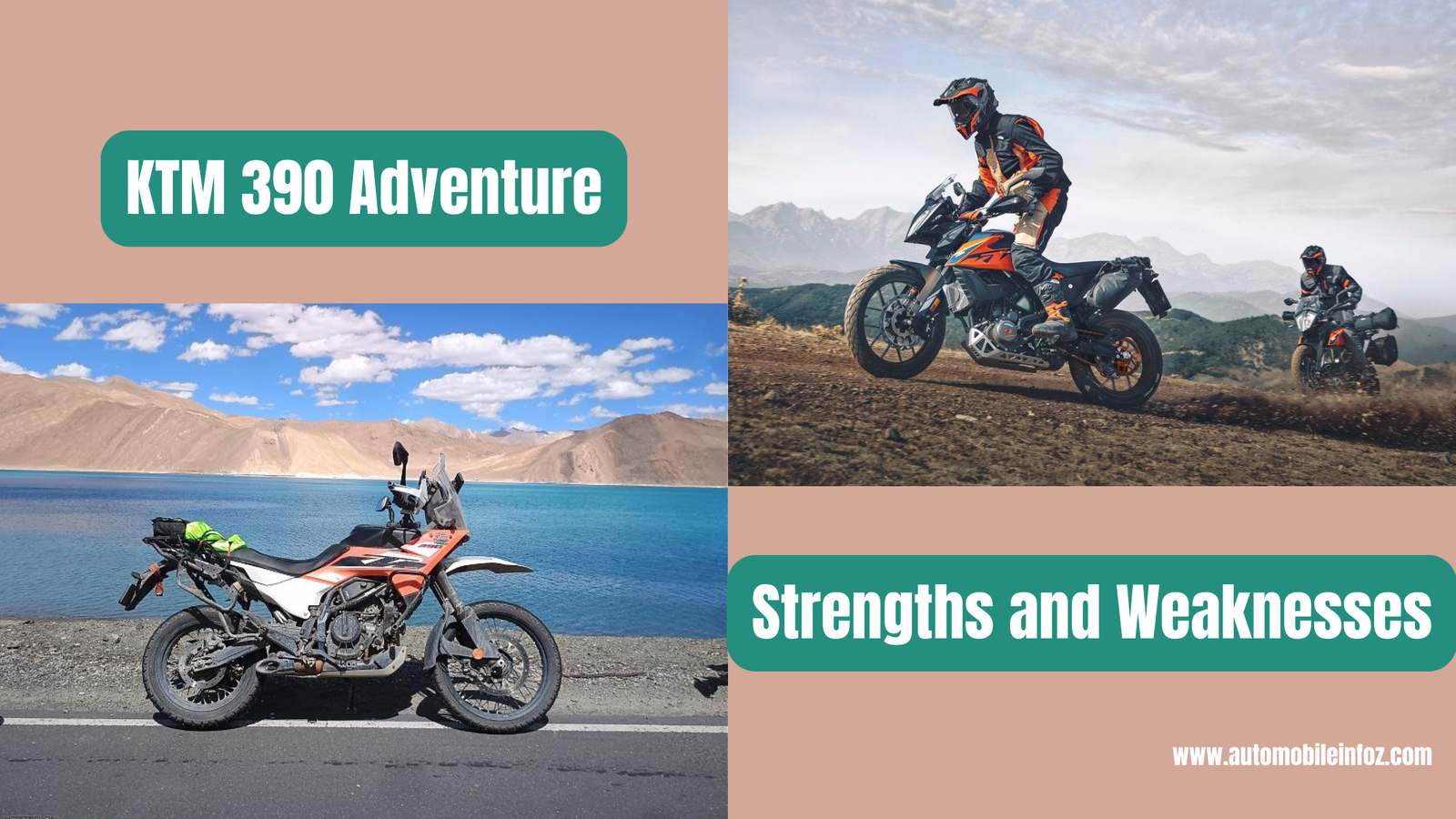
KTM’s 390 Adventure still maintains its strong foothold in the ever-expanding mid-displacement adventure motorcycle segment in India. The Austrian manufacturer’s lowest-end adventure bike has been available around the world since 2019, and has undergone extensive changes in several model years since then, building up a following of those looking for a fun off-the-bike experience without the weight and expense of the litre bikes. The 390 Adventure is rivaled by the Royal Enfield Himalayan 450, Honda CB500X, and the Kawasaki Versys-X 300, with prices in India ranging from around ₹3.46 lakh to ₹3.60 lakh (ex-showroom).
The 2025 model year variants are now entering the market and customers are taking a closer look at their credentials than ever before. But here are three fact based reasons for buying the 390 Adventure — and two reasons for rethinking.
3 Reasons to Buy
1. The Engine Punches Well Above Its Weight Class
The KTM 390 Adventure is powered by a 399cc, liquid-cooled, single-cylinder DOHC engine that produces 44 bhp at 9,000 rpm and 37 Nm of peak torque at 7,000 rpm. These figures are among the most impressive in the sub-400cc-adventure world worldwide. In comparison, the Royal Enfield Himalayan 452 yields 40 bhp and the Kawasaki Versys-X 300 comes with a 296cc parallel twin that produces 39 bhp.
The motor features a 4-valve head, electronic fuel injection and slipper-assist clutch for smoother downshifts during hard braking. KTM’s proprietary engine management system maintains consistent fuel delivery across changing altitudes, giving riders a major advantage while traveling through the Himalayan mountains and high passes where carbureted engines often struggle.
In real world riding conditions, fuel economy ranges from 28 to 33 km/l as gathered from over 60 motorcycle forums by owners and long-term ride reviews. This means at 14.5 litres of tank capacity, the range is about 380 to 450 kilometres per fill, which is adequate for most touring routes in India, but might be restrictive for range anxious riders in remote areas.
2. Electronics and Technology That Belong on Bigger Bikes
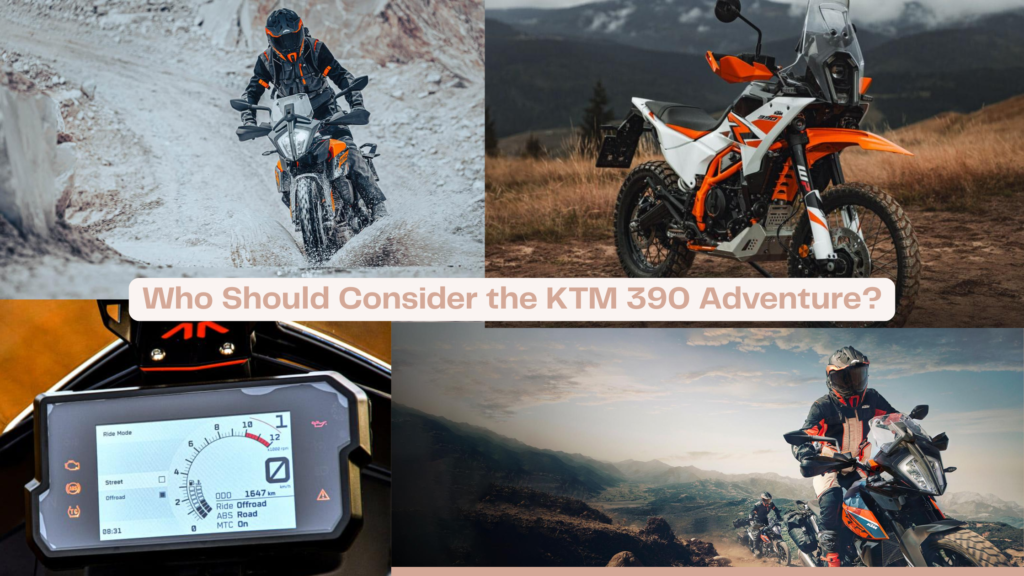
KTM’s 390 Adventure is the only adventure bike in its price range in India with an electronics package as full as the one it has. It comes with cornering ABS jointly developed with the German manufacturer Bosch, two channel traction control with adjustable sensitivity, three riding modes: Street, Off-Road and Rain plus a 5-inch TFT colour instrument cluster that has Bluetooth connectivity.
The cornering ABS employs a six-axis IMU (Inertial Measurement Unit) to measure the lean angle in real time, and adjust the braking force accordingly. This is technology which was earlier only available in bikes costing above ₹10 lakh. In real terms, cornering ABS helps prevent the rear wheels from lifting off the ground when braking hard in the front of the corner and avoids wheel spin when braking during a corner — two scenarios in which collisions are most likely to be severe.
The TFT display also allows for KTM My Ride connectivity with the smartphone, which offers turn-by-turn navigation hints, call and message warnings and controls for music. Automatic sun protection brightness adjustment of the screen. Also, on certain markets, the model year 2024 and 2025 versions come with an added Track mode for extra customisation options for advanced riders looking for a more direct throttle response and less traction control assistance.
3. Off-Road Capability That Feels Honest
Front and back the 390 Adventure comes equipped with WP Apex suspension, a 43mm upside-down telescopic fork at the front with 170mm of travel and a linkage-assisted WP monoshock at the rear with 177mm of travel. These figures are some of the best in the class and can impact the way the motorcycle handles dirt, broken roads and unpaved terrain.
The front wheel is 21 inches while the rear wheel is 17 inches, a spoke-wheel construction on the standard variant intended for off-road applications, with tubeless tyres. Ground clearance is at 200mm, up to 400mm over water and more than most adventure bikes at this price for rocky trails and rutted forest roads.
KTM have also tweaked the Off-Road riding mode to make the traction control respond specifically to loose surfaces. This setting allows the rear wheels to slip a little, allowing the system to let a bit more slip into the rear wheel for momentum and cornering stability on gravel and dirt roads. Motorcycle magazines like Autocar India and BikeWale have remarked that the 390 Adventure excels in off-road performance when compared to its direct rivals for the sub-500cc segment.
2 Reasons to Skip
1. The Seat Height and Ergonomics Challenge Shorter Riders
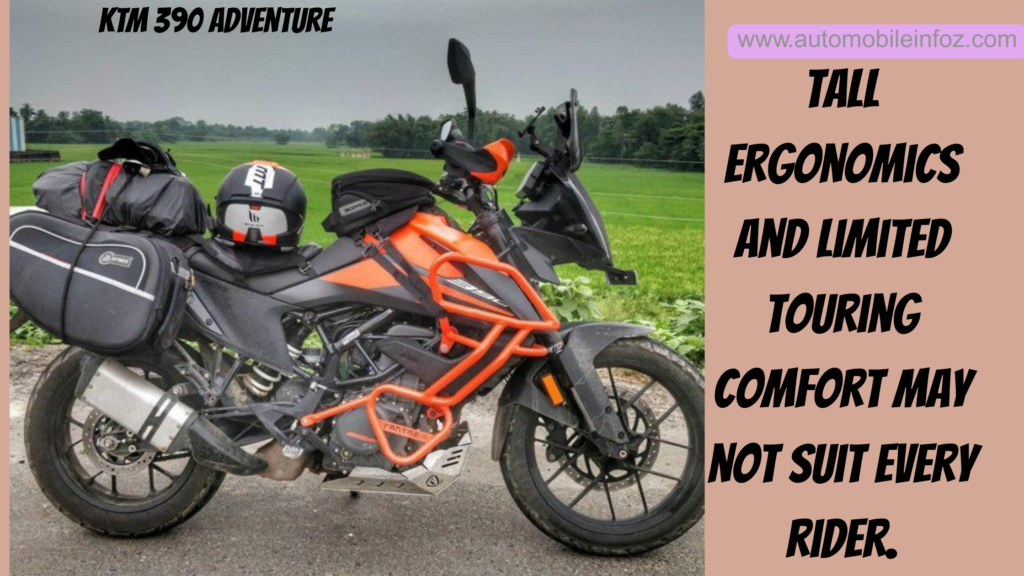
The seat height on the 390 Adventure is quite tall at 855mm, in the standard suspension position. The Royal Enfield Himalayan 450 is at 825mm and the Honda CB500X at 830mm – both are easier for shorter riders. KTM also has a low seat option which reduces the motorcycle’s height to 835mm, though even that is a minimum inseam of about 78 to 80cm to operate the motorcycle with confidence at a standstill.
In all the owner surveys carried out on the Indian motorcycle community circles like XBhp and Team-BHP, seat height is always the top complaint from a total of 390+ riders who are under 5’6”. There are aftermarket options, such as suspension lowering kits, reworked linkages and seat lowering foam, but they usually come at an additional cost of ₹5,000-15,000 to the base cost of ownership. Low speed tip overs are a major percentage of adventure motorcycles accidents in Indian urban riding conditions and riders who are unable to flat foot at traffic signals or while manoeuvring in tight parking areas are at a higher risk for low speed tip overs.
2. Wind Protection and Touring Comfort Are Limited
The 390 Adventure has a standard windscreen that doesn’t provide a high level of wind protection at sustained highway speeds above 100 km/h. The screen is about 230mm tall, and deflects airflow around the rider and not over their head, which is a compromise that can become tiresome after 3 to 4 hours of cycling. Several long-distance travellers and motorcycle journalists have reported that the wind blast at 120 km/h is strong enough to make the rider’s riding position unstable, requiring extra effort in the neck and shoulder muscles to maintain it.
The 390 Adventure is supplied without panniers, top box mounting system or a centre stand, apart from the wind protection. These are typical offerings from several competitors with similar pricing. The cost of customizing the motorcycle for actual touring, such as panniers, a new crash guard, an aftermarket higher windscreen and handlebar risers, usually costs ₹20,000 to ₹45,000 extra depending on preference and fitment options.
There is also a definite vibration in the single-cylinder engine at the steady cruising speed of the highway, usually between 5,500 and 7,000 rpm, that causes vibrations to be felt in the handlebar and footpegs on long straight stretches. This is normal for a single-cylinder engine in this displacement range and not specific to KTM, but may become a tiring experience for some riders used to a parallel-twin or multi-cylinder engine.
Summary Assessment
The KTM 390 Adventure makes for an interesting proposition for those looking for engine power, high-tech electronics, and off-road abilities in a budget of ₹3.5 lakh. It is not a fundamental weakness, just a weakness of shorter riders and/or those intending on serious touring with a lot of mileage without extra investment in accessories etc.
KTM 390 Adventure best suits urban riders who enjoy weekend mountain rides, intermediate off-road enthusiasts, and riders who want advanced technology features. However, riders looking for easier seat access or affordable long-distance touring may find alternatives like the Royal Enfield Himalayan 450 or Yezdi Roadster more practical.