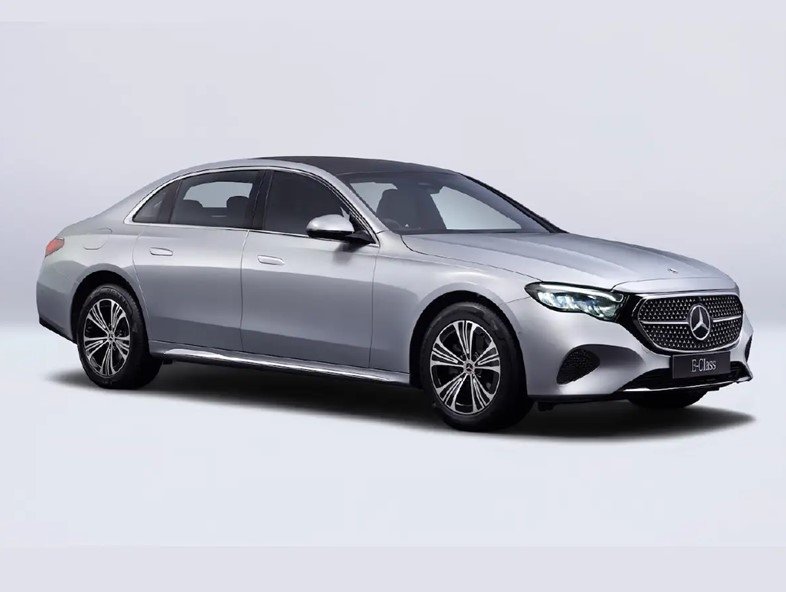
The Mercedes E-Class has gained its status as a standard of automotive engineering that
manages to combine luxury, performance, and advanced technology into one elegant package.
Regardless of whether your car is a newer version with a much-developed driver assistance
system or a well-maintained representative of a previous generation, the E-Class is still a
considerable investment that should be taken care of.
Necessary Maintenance Operations
Oil and Filter Changes
The basis of any maintenance program is oil changes, and Mercedes engines are especially
sensitive to the quality of oil and intervals of oil change.
Synthetic oil changes on the E-Class can be done every 10,000 miles or once a year; however,
driving conditions can necessitate that synthetic oil changes be done more often.
Applying the oil viscosity recommended by the manufacturer is a step in the right direction in
providing maximum protection of the engine.
The most important filters that should be regularly attended to are:
● Air filter: Should be changed every 30,000 miles to prevent loss of engine performance
and faults
● Cabin filter: Filters air quality and HVAC functionality, normally replaced every year
● Fuel filter: Prevents fuel injector damage and provides adequate delivery of fuel
Fluid Maintenance
Fluid maintenance does not end with engine oil. Special attention should be paid to
transmission fluid because Mercedes models use advanced multi-speed automatics in which
clean fluid is key to smooth gear changes.
Brake fluid absorbs moisture over time, lowering its boiling point and reducing braking
performance. Coolant and power steering fluid also wear out and have to be replaced on a
regular basis.
Checking fluid levels monthly and replacing them as per the service schedule is a way of
avoiding system failure, which is much more expensive than regular maintenance.
Key Systems to Monitor
Engine Health
Oil changes are not the only type of regular inspection. Look around the bottom of valve covers
and oil pan gaskets; they are likely to leak due to the age of E-Class models. Listen for any
strange sounds such as ticking or knocking that might indicate an emerging problem.
The cooling system should also be monitored since radiator hoses, water pumps, and
thermostats may malfunction, causing the car to overheat and resulting in devastating damage
to the engine.
Brake System
Mercedes E-Class models operate advanced braking systems, and components that are in poor
condition impact safety and performance.
Check brake pad thickness and listen for squeaking and grinding noises during driving. Inspect
rotors for warping or excessive wear. Brake fluid must be flushed every two years in order to
ensure maximum performance.
Tires and Suspension
Tires must be rotated, inflated, and aligned properly. Uneven tire wear is often a result of
suspension or alignment problems, which should be addressed as soon as possible.
The E-Class suspension system, particularly on models that have air suspension, needs
periodic check-ups to ensure that issues are detected before they turn into major repair work.
DIY vs. Professional Service
The choice between self-maintenance and professional service is based on the level of skill and
the task at hand. Most owners can easily perform simple tasks such as:
● Changing cabin filters
● Checking fluid levels
● Replacing wiper blades
More complicated operations such as brake replacement, timing chain service, or air
suspension system repair usually require professional skills and special equipment.
Many E-Class owners strike a compromise and carry out simple services while putting major
services in the hands of trained specialists.
Repair manuals for Mercedes make a big difference; they have detailed procedures and
specifications to enable you to handle the right tasks with the necessary knowledge and know
when to get the assistance of a professional.
The step-by-step instructions, wiring diagrams, and torque values provided in these manuals
help in making DIY work more precise and less dangerous.
The maintenance guide to a long-term performance of a Mercedes E-Class.
Mercedes-Benz E-Class is a car of one of the most sophisticated luxury saloons that have ever been produced – yet the Germans could use a helping hand. Drive either a diesel E220d or a petrol E350, and it is well-maintained or it is a car that dies your wallet. This is your no-fluff guide to maintaining your E-Class to continue running like new in the years to come.
- Change Oil regularly- Particularly AMG Engines.
Mercedes suggests oil change after 10000 miles (16000 km) or 12 months -whichever arrives first. However, when driving in a hurry or in a hot region, it is wiser to push it to 7,500 miles. The E-Class engines, especially the M276 V6 and the turbocharged M264 are highly precise machineries that require the correct oil specification: MB 229.5 or MB 229.51 in most petrol engines. Off-brand or wrong spec oil is one of the quickest means of triggering expensive oil consumption concerns.
Fact: an E-Class that is not serviced has the potential to burn 1 litre of oil in every 1,000km – an indication of frayed valve stem seals worth more than 3000 dollars to repair.
- Observe Air Suspension (AIRMATIC).
AIRMATIC air suspension is fitted to many E-Class models (W212, W213), which is brilliant when it is healthy, but another known weakness. Air struts, and the compressor pump have a life of 80,0001200000 miles, and once it reaches this level, you will realize that the car sags overnight or rides roughly.
- Check air struts in 30,000 mile intervals due to cracks or oil leaks.
- Change air dryer/filter after every 60,000 miles in order to preserve the compressor.
- Hear a loud pumping on start-up – it means compressor strain.
It costs between $600 and 1200 to repair a failed AIRMATIC strut. Replacing the whole system? That’s $4,000+. Here prevention is all.
- Transmission Service Not Negotiable.
Mercedes frequently sells its 7G-Tronic and 9G-Tronic automatic transmissions as the so-called lifetime fills, that is, they do not need a fluid change at all. Don’t believe it. Practice in the industry is otherwise.
Replacing the transmission fluid after every 60,000-80,000 miles, will significantly lower the occurrence of awkward shifting, slow engagement, and expensive valve body problems. Change of fluid costs between 200 and 400 dollars at an independent specialist – peanuts compared to a 5,000 to 8,000 dollar gearbox rebuild.
- Brake Fluid Must Be check after every two years.
Mercedes E-Class cars have an advanced 4-wheel ventilated disc brakes with Sensotronic Brake Control in the higher trims. Brake fluid is hygroscopic, when moist it increases in time and reduces its boiling point, thus undermining its braking performance under load.
Change or replace braking fluid after every 2 years, irrespective of the amount covered. It is a $80 -120 occupation which safeguards a 1,500 and more brake apparatus.
- Keep the Star Shining: Battery and Electrical Well-being.
The W212 and W213 E-Class are electronically prudent vehicles. A faulty battery does not simply stop the car, but disorient the whole system of the car control network, confusing the ABS, ESP, and transmission modules.
- Change the battery on a proactive basis after every 4-5 years.
- Use AGM battery, not lead-acid (not standard) of Mercedes-approved type.
- Replacing a battery, you should register it through XENTRY or iCarsoft MB tool to make the ECU recalibrate the charging process.
A very frequent error is not registering batteries at all, and this will reduce the life of the new battery very considerably.
- Coolant System: The Hushpuppy.
The E-Class control cooling employs thermostats housings and expansion tanks made of plastic which are brittle in old age. A ruptured coolant hose or a broken thermostat assembly will cause the engine to overheat in a few minutes.
Check hoses and the expansion tank cap after every 40,000 miles. Change, with Mercedes-approved antifreeze MB 325.6, every 4 years. Do not mix the types of coolant in the system it will cause gel to form and block passages.
Conclusion
Dealer servicing maintains the warranty but does not necessarily need it in the long term. An independent garage garage that is good in Mercedes-specialist (XENTRY diagnostic access) will offer the same quality at 40–60% less price.
The E-Class the owners who keep up with maintenance are rewarded. Neglect it and it turns into one of the costliest cars in the street. Respect it and it will give you easy 300,000+ miles of trouble-free performance.