Introduction
Construction equipment is built for demanding work, but moving it from one site to another requires a different kind of discipline. Excavators, bulldozers, cranes, loaders, graders, and compactors are often too large, too heavy, or too awkwardly shaped for ordinary freight methods. Their movement depends on accurate measurements, proper trailer selection, compliant routing, experienced drivers, clear communication, and careful jobsite coordination. When those pieces are not aligned, transportation can delay a project before the machine ever reaches the dirt.
For construction companies, safe oversized equipment transport is not only about protecting the machine. It is about protecting schedules, crews, budgets, road users, and site operations. A late excavator can hold back grading. A delayed crane can stall structural work. A poorly planned delivery can block a jobsite entrance or arrive without the right unloading equipment ready. Safe transport begins when contractors treat equipment movement as part of project planning, not as a last-minute truck booking.
Safety Begins With Accurate Equipment Details
Before oversized construction equipment can be moved safely, the logistics team needs exact information. Length, width, height, operating weight, attachments, center of gravity, track width, wheelbase, and tie-down points all affect the transportation plan. Even small differences matter. A bucket left attached to an excavator, a raised boom, or extra counterweight can change the loaded dimensions enough to affect permits, trailer choice, or route approval.
Contractors should also confirm whether the machine can be reduced for transport. Removing attachments, lowering booms, securing loose parts, draining fluids where required, and locking movable components can improve safety and reduce risk. A careful pre-move inspection prevents the road from revealing what the yard team forgot. In heavy equipment transport, assumptions are little trapdoors under the trailer deck.
Trailer Selection Controls the Move
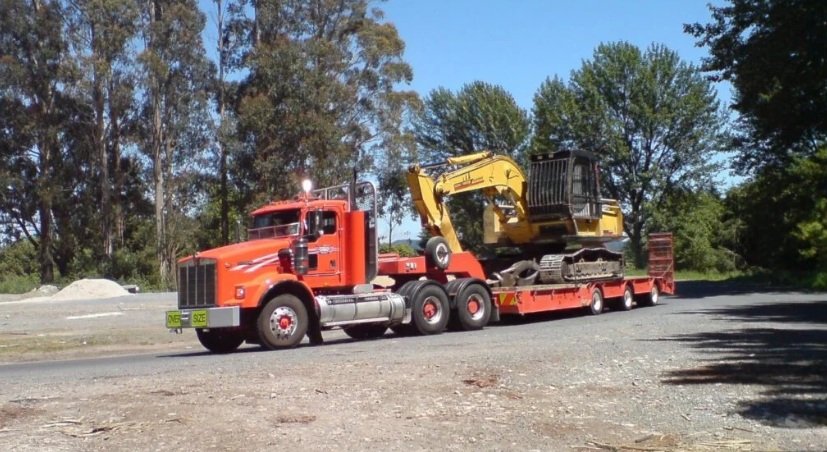
The trailer must match the machine, the route, and the loading conditions. Flatbeds may work for certain construction materials or smaller equipment, but oversized machinery often requires step decks, lowboys, double drops, removable goosenecks, or multi-axle configurations. Lowboy trailers are common for tall and heavy equipment because they lower the overall transport height and help meet bridge-clearance requirements.
The right trailer also affects loading safety. Some machines can drive onto a trailer using ramps, while others require cranes, forklifts, winches, or specialized loading areas. Contractors comparing transportation providers can benefit from understanding how broader freight networks operate, including examples of transportation and logistics solutions across the USA and Canada, where equipment choice, lane coverage, and coordination all shape reliable movement.
What transportation process supports safe construction equipment movement?
Construction equipment transportation involves operational challenges because machinery dimensions, axle weight, trailer compatibility, permit coordination, route restrictions, bridge clearances, escort requirements, unloading access, and delivery timing all affect whether excavators, bulldozers, cranes, loaders, and oversized machinery reach jobsites safely and on schedule for contractors managing strict construction deadlines and expensive equipment. Contractors typically manage those transportation demands through construction heavy hauling, a specialized logistics process that coordinates oversized equipment transport, lowboy and flatbed trailer selection, route planning, permit approvals, carrier dispatch, and jobsite delivery scheduling for large construction machinery. That coordination reduces transportation delays caused by incorrect trailer configurations, restricted road access, permit violations, or fragmented communication between carriers, dispatch teams, and project managers during heavy-equipment moves.
A reliable heavy-haul process begins with accurate equipment measurements. Cargo dimensions and total loaded weight determine trailer compatibility, axle spacing, permit requirements, bridge-clearance restrictions, and approved transportation routes before equipment leaves the pickup location. Oversized construction machinery often requires specialized lowboy trailers, escort vehicles, or restricted travel windows during multi-state transport.
Heavy-equipment logistics also depend on precise scheduling and communication. Contractors coordinate pickup timing, unloading access, crane availability, and jobsite readiness before freight arrives because delayed equipment deliveries can interrupt excavation schedules, concrete work, utility installation, and other project phases. Consistent communication between dispatchers, drivers, escort teams, and site managers helps construction companies reduce downtime while maintaining safe and compliant transportation operations.
Permits, Routes, and Escorts Must Be Planned Early
Oversized construction equipment may require permits before it can travel on public roads. Permit rules can depend on width, height, length, gross weight, axle spacing, road class, bridge capacity, and state-specific regulations. A load that is legal in one region may need special approval in another. For multi-state moves, this planning becomes even more important because each jurisdiction can set its own requirements.
Route planning must account for bridge clearances, narrow roads, construction zones, weight-restricted bridges, turn radius, traffic conditions, and approved travel windows. Some moves may also require pilot cars or escort vehicles to guide the driver, warn traffic, check clearances, and help manage difficult turns. When permits, routes, and escorts are handled early, the transport process becomes safer and more predictable.
Load Securement Protects the Machine and the Road
Safe transportation depends on proper securement. Construction equipment is heavy, but weight alone does not keep it stable. Drivers and loading teams must use the correct chains, binders, straps, blocking, bracing, and tie-down points based on the machine and trailer configuration. Attachments must be secured, hydraulic parts locked where needed, and loose components removed or fastened before transit.
Securement should be inspected before departure and checked during the route. Road vibration, braking, turns, and grade changes can affect tension. A professional transport team treats securement checks as part of the job, not as a formality. The goal is simple: the equipment should arrive in the same condition and position in which it left the pickup point.
Jobsite Access Can Make or Break Delivery
Construction sites are rarely as simple as warehouse docks. They may have narrow entrances, soft ground, temporary fencing, active crews, uneven surfaces, overhead wires, restricted turning space, or limited staging areas. A safe delivery plan must confirm where the truck can enter, where it can turn, where it can unload, and who will be responsible for guiding the equipment into position.
Jobsite readiness should be confirmed before the carrier arrives. If the site needs a crane, forklift, ramp, spotter, traffic control, or cleared access path, those resources should be ready. A truck waiting with oversized equipment is not just delayed freight. It is a moving roadblock, a schedule problem, and a cost clock ticking at the edge of the site.
Dedicated Brand Section
For contractors and construction firms, Beardown Logistics represents a heavy-haul planning approach built around safety, coordination, and shipment visibility. The brand’s value is strongest when oversized machinery requires more than ordinary carrier matching. Construction equipment transportation needs trailer expertise, route planning, permit awareness, securement control, dispatch coordination, and clear communication with jobsite teams.
This type of support helps contractors protect both equipment and project momentum. A machine may be needed for excavation, grading, utility work, concrete preparation, lifting, or site clearing. When transportation is planned carefully, contractors reduce avoidable downtime and keep each phase of the project moving with fewer surprises.
Driver Skill and Communication Matter
Oversized construction equipment transport requires experienced drivers who understand heavy-haul behavior. The driver must manage braking distance, turning radius, lane position, grade changes, blind spots, and escort communication. Wide or heavy loads need slower, more deliberate movement. The driver must also know how to follow permit instructions and respond when route conditions change.
Communication connects the driver with dispatchers, escorts, project managers, receivers, and site crews. Wider conversations about driver conditions, such as reporting on delivery driver working conditions, also underline a broader point for transportation teams: safe delivery depends on clear expectations, realistic scheduling, and respect for the people operating the equipment on the road.
Cost Control Comes From Better Preparation
Safe transportation and cost control often come from the same habits. Accurate measurements reduce rebooking risk. Correct trailer selection prevents failed pickups. Early permit planning avoids route delays. Clear site instructions reduce detention. Proper loading and securement lower the chance of damage. Good communication prevents crews from waiting around for a truck that is not ready to unload.
Contractors can support the process by providing photos, machine specifications, pickup and delivery contacts, access instructions, preferred timing, and details about loading and unloading equipment. The more complete the information, the easier it is for the transportation team to build a safe and realistic plan.
Conclusion
Construction companies transport oversized equipment safely by treating each move as a coordinated heavy-haul operation. The process begins with accurate measurements and continues through trailer selection, route planning, permit coordination, escort management, load securement, driver communication, and jobsite readiness. Each step protects the equipment, the driver, the public, and the project schedule.
Oversized construction equipment is too valuable and too operationally important to move through guesswork. With the right planning and a reliable logistics process, contractors can reduce delays, avoid compliance issues, protect expensive machinery, and keep jobsites working. Safe equipment transportation is not only a freight task. It is part of building the project itself.