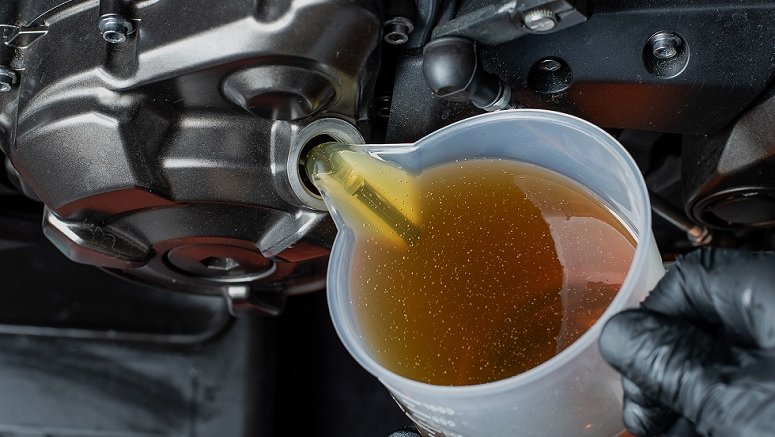
Ask any motorcycle industry professional, “What matters the most to keep a bike running smoothly for years?” and the answer is a well-maintained engine. One of the simplest ways to ensure it is also one of the most delayed – engine oil change.
Most riders pay attention to the motorcycle when the idle is rough, there is an odd noise in the engine, or gear shifts become hard and jerky. Let’s look at how to change the engine oil in your motorcycle and prevent the damage before it starts.
Why Engine Oil Matters More Than Most Riders Realise?
Metal parts in the engine rub against each other thousands of times per minute, causing friction, heat, and wear. Engine oil handles all this simultaneously:
- Forms a thin film between moving metal parts to reduce friction and wear.
- Carries heat away from the combustion area.
- Traps soot, dust, and metallic particles, holding them until the next drain.
- Keeps gear engagement smooth.
Engine oil becomes thinner with heat or thicker with sludge, and it will lose its protective ability. An engine oil that protects the engine at 1,000 kms may not do the same at 3,000 kms.
6 Warning Signs Your Motorcycle Engine Oil Needs Changing
If any of these warning signs appear together, it is time to get the motorcycle checked.
| Warning Sign | What It Likely Means |
| The loud and clunky sounds from the engine are noticeable | Engine oil has lost its cushioning ability |
| Gear shifts are hard | Lubrication between the clutch and gearbox components has reduced |
| The engine runs hotter than usual, especially in start-stop traffic | Engine oil is no longer dispersing heat effectively |
| Engine oil looks black and gritty on the dipstick | Engine oil is contaminated with sludge and by-products of combustion |
| Faint burning smell near the engine | Degraded engine oil is burning off on hot engine surfaces |
| Engine oil level keeps dropping between services | Possible leakage, or the engine is consuming engine oil |
Recognising these issues early and getting a regular engine oil change for motorcycle done will ensure minor warning signs don’t turn into expensive mechanical failures.
How Often Should You Change Motorcycle Engine Oil?
Engine Oil Change by Service Interval:
Start with the owner’s manual because it sets intervals based on standard conditions:
- For a new motorcycle, get the engine oil changed during the first service. Skipping it affects engine break-in.
- For an older motorcycle, have the engine oil changed after riding a specified number of kilometres or after a set period.
Engine Oil Change Due to Road Conditions:
Make it a habit to visually inspect the engine oil, because Indian roads and riding conditions are different. Visit the service centre if anything looks off when you’re riding in these conditions.
- Dusty roads: Check the engine oil condition for any changes in colour or texture caused by particles entering the engine.
- Daily city riding: Check the engine oil level, as start-stop traffic generates more heat, accelerating engine oil degradation.
- Highway rides: Check the engine oil level and appearance after extended trips or long rides.
- Pillion or heavy load: Check the engine oil condition if you regularly ride with a pillion or carry extra weight. It puts a load on the engine.
- Monsoon season: Check the engine oil condition after sustained riding in monsoons.
Time-based degradation is as real as kilometre-based wear. Engine oil in a lightly used motorcycle still oxidises over months and loses its protective properties.
SAE Viscosity Grades Explained: How to Read the Numbers on the Pack
There are markings like SAE 10W-30 or SAE 20W-50 on a pack of motorcycle engine oil
- “W” stands for Winter.
- The number before “W” represents the engine oil’s viscosity during cold startups. Lower numbers indicate better flow at low temperatures, reducing initial engine wear.
- The number after “W” represents the engine oil’s viscosity at normal operating temperatures. Higher numbers indicate a thicker protective film at high engine heat.
| SAE Grade | Cold Start Behaviour | Hot Engine Behaviour | Typically Used in |
| SAE 10W-30 | Flows quickly at cold start | Moderate thickness at operating temperature | Milder climates, lighter engines |
| SAE 20W-40 | Slightly slower to move when cold | Thicker film at high temperatures | Warm climates, moderate-displacement engines |
| SAE 20W-50 | Slower cold-start flow | High viscosity under sustained heat | Hot climates, larger or older engines |
Riders often ask for the best engine oil for 100cc bikes, 125cc bikes, 150cc bikes and so on. The honest answer is to opt for what the owner’s manual specifies. Check the performance rating along with the viscosity. If the manual says API SN-rated engine oil, use that or a compatible higher-rated category.
How to Change Motorcycle Engine Oil at Home: Step-by-Step
For riders who enjoy managing their own routine motorcycle maintenance, or if the manufacturer allows home servicing, changing the engine oil yourself is manageable. Here is a step-by-step method:
Step 1 – Park on the centre stand (or a paddock stand) on flat ground. Start the motorcycle and keep the engine idle for a minute or two. Warm engine oil drains faster and more completely.
Step 2 – Turn the motorcycle off. Position the drain tray under the engine, then remove the drain bolt. If the filter is due for replacement, remove it now, too. Both should drain together, so no old engine oil gets left behind. Let everything drain fully.
Step 3 – Check the drain bolt washer and replace it if it is worn or flattened. Reinstall the bolt and tighten it to the torque in the manual. Don’t over-tighten.
Step 4 – Before fitting the new filter, ensure that the old rubber ring comes off with the old one. It sometimes sticks to the engine block. Once clear, apply a thin film of fresh engine oil to the new filter seal and hand-tighten it in.
Step 5 – Pour the correct quantity of fresh motorcycle engine oil through a funnel.
Step 6 – Start the motorcycle and run the engine for a minute, checking for leaks around the drain bolt and filter. Turn the motorcycle off, wait 2 minutes for the engine oil to settle, and check the level (refer to your owner’s manual to see whether to balance the bike flat on both wheels or on the centre stand).
The drained engine oil should be disposed of responsibly. Don’t pour it down a drain or onto the ground. Most authorised service centres or mechanical garages will take drained engine oil for proper disposal.
Why Delaying an Engine Oil Change Costs More Than the Change Itself
Engine damage builds up quietly. A proactive engine oil change protects engine components from the abrasive effects of degraded, sludge-filled engine oil. When you skip or delay the engine oil change, you are trading routine maintenance for a hefty engine repair bill later.
The correct SAE-grade engine oil, following the service schedule, and adjusting for real-world riding conditions, all require a small amount of attention. When done consistently, it keeps an engine running reliably for years, avoiding expensive repairs.