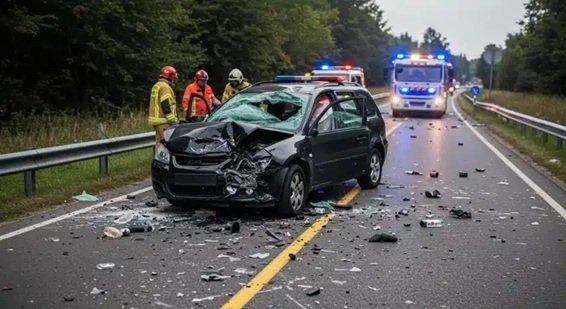
A couple is driving home from dinner on Tamiami Trail when a driver who left a bar in Sarasota forty minutes earlier runs a red light and T-bones their vehicle at the intersection. The husband sustains a fractured pelvis and a traumatic brain injury. His wife spends three days in the hospital with broken ribs and a punctured lung. Neither of them was doing anything wrong. Neither of them had any warning. Within forty-eight hours of the crash, the at-fault driver’s insurance company has already called. The adjuster is polite. The offer sounds meaningful until a personal injury attorney looks at the medical bills already accumulated and recognizes that the number on the table does not cover the first week of hospitalization, let alone what comes next.
Drunk driving crashes are not ordinary car accidents. The injuries are frequently more severe because impaired drivers often fail to brake before impact. The legal landscape is different because Florida law creates specific remedies for victims of drunk driving that do not exist in standard negligence cases. And the compensation available, when properly pursued, reflects the full weight of what an impaired driver’s decision cost the people it harmed. Understanding what that compensation looks like, and how it is pursued, is where informed decision-making begins for any family navigating the aftermath of a drunk driving crash on Florida’s Gulf Coast.
Key Takeaways
- Victims of drunk driving accidents in Florida may recover economic damages covering all financial losses, non-economic damages for personal harm, and in appropriate cases punitive damages specifically designed to punish reckless conduct.
- Florida’s serious injury threshold must be met before a victim can step outside the no-fault PIP system and pursue a direct claim against the at-fault driver for non-economic damages.
- Punitive damages are available in Florida drunk driving cases under Florida Statute Section 768.736 when the driver’s blood alcohol concentration was 0.08 percent or higher at the time of the crash.
- Dram shop liability under Florida Statute Section 768.125 may allow victims to pursue claims against establishments that served alcohol to the impaired driver in specific circumstances.
- A drunk driver accident attorney can identify every available source of compensation and ensure the claim reflects the full financial and personal cost of the crash.
Why Drunk Driving Accident Claims Are Legally Distinct
Drunk driving crashes carry a different legal weight than crashes caused by ordinary negligence, and that difference shows up in the compensation available to victims.
In a standard car accident claim in Florida, the legal framework centers on negligence. Did the driver fail to exercise reasonable care? Did that failure cause the crash? What damages resulted? These questions produce the foundation of a compensatory damages claim designed to make the injured person financially whole.
When alcohol or drug impairment caused the crash, the framework expands. The at-fault driver did not simply make a mistake in judgment or fail to pay adequate attention. They made a deliberate decision to operate a vehicle while impaired, a decision whose risk to others was knowable and foreseeable. Florida law treats that decision differently, and the difference matters significantly for the compensation available to the people that decision harmed.
Economic Damages: The Financial Cost of the Crash
Economic damages cover every measurable financial loss that flows directly from the crash and its consequences.
Medical expenses are typically the largest component. Emergency transport, emergency room treatment, hospitalization, surgery, specialist consultations, diagnostic imaging, physical therapy, occupational therapy, prescription medication, and any assistive devices required for recovery are all recoverable in full. In serious drunk driving crash cases, these costs accumulate quickly and often extend well beyond the initial hospitalization into months or years of ongoing treatment.
Future medical expenses are recoverable as well. A victim whose injuries require ongoing neurological care, repeated orthopedic procedures, or long-term rehabilitation has future costs that are just as real as the bills already received, and just as compensable. Calculating future medical needs accurately requires expert medical testimony from treating physicians and sometimes independent medical specialists who can project the lifetime cost of care based on the specific nature and severity of the injuries sustained.
Lost income covers wages and earnings missed during recovery. For victims who cannot return to work for weeks or months, the economic impact of a drunk driving crash extends far beyond medical bills. Lost earning capacity addresses the longer-term economic consequences for victims whose injuries permanently affect their professional ability, whether through physical limitation, cognitive change, or the combination of both that serious crash injuries frequently produce.
Out-of-pocket expenses including transportation to medical appointments, home modification costs for victims with mobility limitations, and the cost of hiring assistance for tasks that injuries have made impossible round out the economic picture. These costs are real and recoverable, and they belong in any comprehensive damages calculation.
Non-Economic Damages: The Personal Cost of the Crash
Non-economic damages address the harm that financial records do not capture but that is no less real for the people living with it.
Pain and suffering encompasses the physical pain of crash injuries across the entire recovery period. For a victim managing chronic pain from a spinal injury, or rebuilding cognitive function after a traumatic brain injury, that suffering is a daily reality that does not end when the medical bills stop arriving. Florida courts recognize pain and suffering as genuine and compensable harm, and the value attributed to it in a well-developed case reflects the actual impact on the victim’s life rather than a generic multiplier applied to the medical expenses.
Emotional distress is a separate and recognized category of non-economic damages in Florida. Post-traumatic stress responses following serious crashes are clinically documented and legally compensable. A victim who cannot drive past the intersection where the crash occurred without experiencing intrusive recollection, or who has developed anxiety that affects their ability to travel, work, or maintain relationships, has suffered psychological harm that belongs in the damages picture alongside the physical injuries.
Loss of enjoyment of life addresses the specific ways the crash has changed what the victim can do, and what they can no longer do. A person whose active lifestyle, outdoor hobbies, or athletic pursuits were ended by injuries sustained in a drunk driving crash on Fruitville Road has lost something that a medical bill does not reflect but that a comprehensive damages claim should.
Loss of consortium provides the injured person’s spouse with compensation for the impact the injuries have had on the marital relationship, including companionship, intimacy, and the practical mutual support that a functioning marriage involves.
Punitive Damages: Holding Drunk Drivers Accountable Beyond Compensation
Punitive damages are not available in most personal injury cases. In Florida drunk driving accident cases, they frequently are.
Florida Statute Section 768.736 establishes that a driver whose blood alcohol concentration was 0.08 percent or higher at the time of the crash is presumed to have acted with conscious disregard for the safety of others. That presumption creates a statutory path to punitive damages that does not exist in standard negligence cases and that reflects the law’s recognition that impaired driving is a different category of conduct, not a mistake but a decision whose risk was foreseeable and whose consequences were preventable.
Punitive damages in Florida are subject to limits under Florida Statute Section 768.73, which generally caps them at three times the compensatory damages awarded or five hundred thousand dollars, whichever is greater. When the defendant’s conduct was motivated by unreasonable financial gain with specific knowledge that harm was likely, the cap may be exceeded. A drunk driver accident attorney evaluates whether the specific facts of a case support a punitive damages claim and pursues it aggressively when they do, because it represents a meaningful component of the total recovery available to seriously injured victims.
The practical significance of punitive damages in drunk driving cases extends beyond the additional financial recovery. The pursuit of punitive damages changes the dynamic of settlement negotiations, because insurers and defense attorneys know that a jury presented with evidence of deliberate impairment and its consequences may award amounts that reflect their view of the conduct’s severity rather than just the economic and medical damages documented in the claim file.
Dram Shop Liability: When the Bar That Served Them Shares Responsibility
Florida’s dram shop law creates a specific avenue for injured victims when the impaired driver was served alcohol by a licensed establishment before the crash.
Florida Statute Section 768.125 holds alcohol vendors liable in two specific circumstances: when they knowingly serve a person who is habitually addicted to alcohol, or when they serve a minor who subsequently causes an accident resulting in injury or death. These are narrow but practically significant exceptions that can expand the sources of compensation available to seriously injured victims beyond what the drunk driver’s personal insurance policy provides.
Dram shop cases require specific evidence about the driver’s alcohol consumption at the establishment, the establishment’s awareness of the driver’s condition at the time of service, and the causal connection between that service and the subsequent crash. A drunk driver accident attorney can investigate the driver’s activity before the crash, obtain relevant surveillance footage and sales records from the establishment, and develop the witness evidence needed to support a dram shop claim when the facts warrant it.
When the at-fault driver carries minimum liability insurance of ten thousand dollars per person and the victim’s damages are in the hundreds of thousands, the practical importance of identifying every available source of compensation, including a potentially liable bar or restaurant, becomes immediately clear.
Florida’s No-Fault System and the Serious Injury Threshold
Florida’s no-fault PIP system pays a portion of initial medical expenses and lost wages through the injured person’s own insurance regardless of fault, but its ten thousand dollar limit is exhausted quickly in serious drunk driving crash cases.
When injuries meet Florida’s serious injury threshold under Florida Statute Section 627.737, meaning they involve significant and permanent loss of an important bodily function, permanent injury, significant and permanent scarring or disfigurement, or death, the victim has the right to step outside the no-fault system and file a direct claim against the drunk driver for the full range of compensatory and punitive damages available under Florida law.
Given the severity of injuries that impaired driving crashes typically produce, the serious injury threshold is met in the vast majority of drunk driving accident cases. A drunk driver accident attorney can evaluate whether the threshold applies and ensure that the medical documentation supports that determination in a way that withstands the scrutiny of the at-fault driver’s insurer.
Frequently Asked Questions
Can I recover compensation if the drunk driver had minimum insurance coverage?
Yes, though the at-fault driver’s policy may not be sufficient to cover the full value of serious injuries. A drunk driver accident attorney will investigate every available source of compensation, including uninsured and underinsured motorist coverage under your own policy, dram shop liability against the establishment that served the driver, and any umbrella coverage the at-fault driver may carry. Minimum insurance limits are frequently the beginning of the recovery analysis, not the end.
Does a criminal DUI conviction help my civil claim?
A conviction can be used as evidence in a civil proceeding and significantly strengthens the liability foundation of the claim. However, a civil drunk driving accident claim does not depend on a criminal conviction. The civil standard of proof, preponderance of the evidence, is lower than the criminal beyond-a-reasonable-doubt standard, and civil claims can succeed even when criminal charges were not filed or did not result in conviction.
What if the drunk driver was uninsured?
Florida’s uninsured motorist coverage under your own auto insurance policy may provide the primary source of compensation when the at-fault driver has no insurance. South Florida has one of the highest rates of uninsured drivers in the country, which makes uninsured motorist coverage a practically important protection for Gulf Coast drivers. A drunk driver accident attorney can evaluate all available coverage sources based on the specific facts of the crash.
How is pain and suffering calculated in a Florida drunk driving case?
There is no fixed formula for calculating non-economic damages in Florida personal injury cases. Courts and juries consider the nature and severity of the injuries, the duration of the recovery period, the specific ways the injuries have affected the victim’s daily life and relationships, and expert medical testimony about the prognosis and long-term consequences. A drunk driver accident attorney develops this evidence through medical records, treating physician testimony, and when appropriate expert assessment of the psychological and functional impact of the injuries.
How long do I have to file a drunk driving accident claim in Florida?
Florida’s statute of limitations for personal injury claims is two years from the date of the crash following legislative changes effective March 2023. For wrongful death claims arising from fatal drunk driving crashes, the two-year period runs from the date of death. Evidence in drunk driving cases, including breathalyzer records, law enforcement reports, and establishment surveillance footage, is most accessible immediately after the crash, which makes consulting a drunk driver accident attorney promptly after the incident the most effective way to protect all available options.
Understanding What Is Available Is the First Step Toward Pursuing It
The compensation available after a drunk driving crash in Florida is more comprehensive than most victims realize in the immediate aftermath of the incident. Economic damages, non-economic damages, punitive damages, and potentially dram shop liability together reflect the full legal weight that Florida law places on the decision to drive while impaired. Understanding what each category covers, how it is calculated, and what evidence supports it is the foundation of a claim that accurately reflects what the crash actually cost the people it harmed.
For victims and families in Sarasota, Bradenton, Venice, North Port, and the surrounding Gulf Coast communities, consulting with a drunk driver accident attorney who understands both Florida’s specific legal framework and the practical realities of these cases is the most informed step available toward full recovery.
Disclaimer: This article is intended for general informational and educational purposes only and does not constitute legal advice. Every situation is different. Readers should not act or refrain from acting on the basis of this content without consulting a licensed attorney familiar with Florida law. Florida statutes referenced reflect the law as understood at the time of publication and are subject to change. Dannheisser Injury Law is located in Sarasota, Florida.