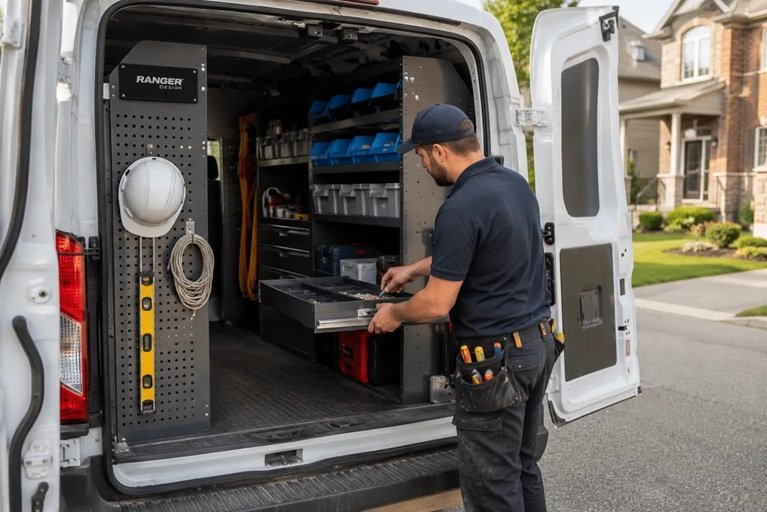
For many service contractors, the workday starts and ends with a commercial van. Whether handling HVAC repairs, electrical service calls, plumbing installations, or general maintenance work, contractors depend on mobile vehicles to carry tools, parts, and equipment efficiently between job sites.
An unorganized van can create delays that add up throughout the day. Searching for tools, shifting equipment, or replacing damaged materials reduces productivity and increases frustration for technicians in the field. Proper van shelving helps solve these issues by creating a more organized and functional mobile workspace.
Well-designed storage systems improve workflow, reduce downtime, and help contractors complete jobs more efficiently while maintaining a professional appearance on-site.
Organized Storage Reduces Time Lost on Job Sites
One of the biggest operational challenges for service contractors is wasted movement. When tools and materials are not stored properly, technicians often spend valuable time searching through bins, boxes, or stacked equipment.
A shelving system creates designated storage areas for commonly used items. This allows workers to locate tools quickly without unloading large sections of the van to access smaller components.
For contractors managing multiple appointments each day, even small time savings matter. Saving five to ten minutes at each stop can improve scheduling flexibility and reduce delays across an entire workday.
Improved organization also helps reduce forgotten items. When every tool and part has a consistent location, technicians can identify missing inventory before leaving for a service call. This supports better preparation and fewer return trips to warehouses or suppliers.
Contractors serving busy regions such as Cambridge, Kitchener, Waterloo, and Guelph often face tight schedules and significant travel between jobs. Efficient storage systems help crews stay productive while minimizing disruptions throughout the day.
Better Workflow Supports Mobile Workspace Efficiency
Commercial vans function as mobile workshops for many tradespeople. The layout inside the vehicle directly affects how efficiently technicians can work in the field.
Proper shelving systems improve accessibility by positioning frequently used equipment within easy reach. Adjustable shelves, compartment dividers, and storage bins help organize tools according to daily workflow needs.
This becomes especially important for contractors carrying inventory for multiple service categories. Electricians may need separate storage for testing equipment, conduit fittings, fasteners, and safety gear. Plumbers often transport pipe fittings, sealants, hand tools, and replacement parts in the same vehicle.
Professionally planned van shelving installation systems can help reduce unnecessary movement inside the vehicle while improving access to essential equipment during service calls. Organized layouts also make it easier for technicians to restock inventory at the end of each shift.
Efficient workflow inside the van can reduce physical strain as well. Reaching into cluttered storage areas or repeatedly moving heavy equipment increases fatigue over time. Structured shelving systems create safer access to tools and materials while improving overall job site readiness.
Van Upfitting Helps Protect Equipment and Inventory
Tools and equipment represent a major investment for service contractors. Without proper storage, items can shift during transit, leading to damage, wear, or lost inventory.
Shelving systems designed for commercial vehicles help secure equipment while keeping materials separated and protected. Storage compartments reduce the likelihood of tools colliding during transport, which helps extend equipment lifespan.
Organized storage can also improve inventory visibility. Contractors who know exactly what supplies are available inside each van can avoid over-purchasing duplicate materials or running out of critical components unexpectedly.
As part of broader van upfitting strategies, shelving systems may also improve weight distribution within the vehicle. Balanced storage layouts can help support safer driving conditions and reduce unnecessary strain on suspension systems.
For growing companies managing several service vehicles, consistent shelving layouts across the fleet can simplify operations significantly. Technicians can move between vans more easily when storage systems follow the same organizational structure.
Professional Vehicle Organization Improves Customer Perception
Efficiency is not the only advantage of organized service vehicles. Customers often notice how contractors maintain their equipment and workspaces.
A clean, organized van can reinforce professionalism and reliability when technicians arrive on-site. Clients may feel more confident in a contractor’s attention to detail when tools and materials are stored neatly rather than piled loosely inside the vehicle.
Professional organization also improves the overall job site experience. Technicians can retrieve equipment quickly without creating unnecessary clutter around the property. Faster setup and cleanup contribute to smoother service appointments and fewer disruptions for customers.
For contractors operating in competitive local markets, presentation matters. Businesses that maintain organized service vehicles often create stronger impressions during residential and commercial visits alike.
This can be especially valuable for smaller contractors and independent tradespeople building long-term client relationships through repeat business and referrals.
Fleet Efficiency Depends on Consistent Vehicle Organization
As service companies expand, vehicle organization becomes increasingly important at the operational level. Inconsistent storage setups across a fleet can slow down technicians and complicate inventory management.
Standardized shelving systems help improve fleet productivity by creating predictable storage processes. Technicians spend less time adapting to unfamiliar layouts, and managers gain better oversight of tools and inventory allocation.
Consistent service van organization can also support onboarding for new employees. Clear storage systems make it easier for technicians to learn where equipment belongs and how inventory should be maintained.
For fleet managers, organized vans may contribute to reduced downtime caused by lost tools, damaged equipment, or inefficient restocking procedures. Over time, these operational improvements can support stronger scheduling performance and more reliable service delivery.
As contractors continue looking for ways to improve productivity, properly designed van shelving remains one of the most practical investments for creating a more efficient mobile workspace.