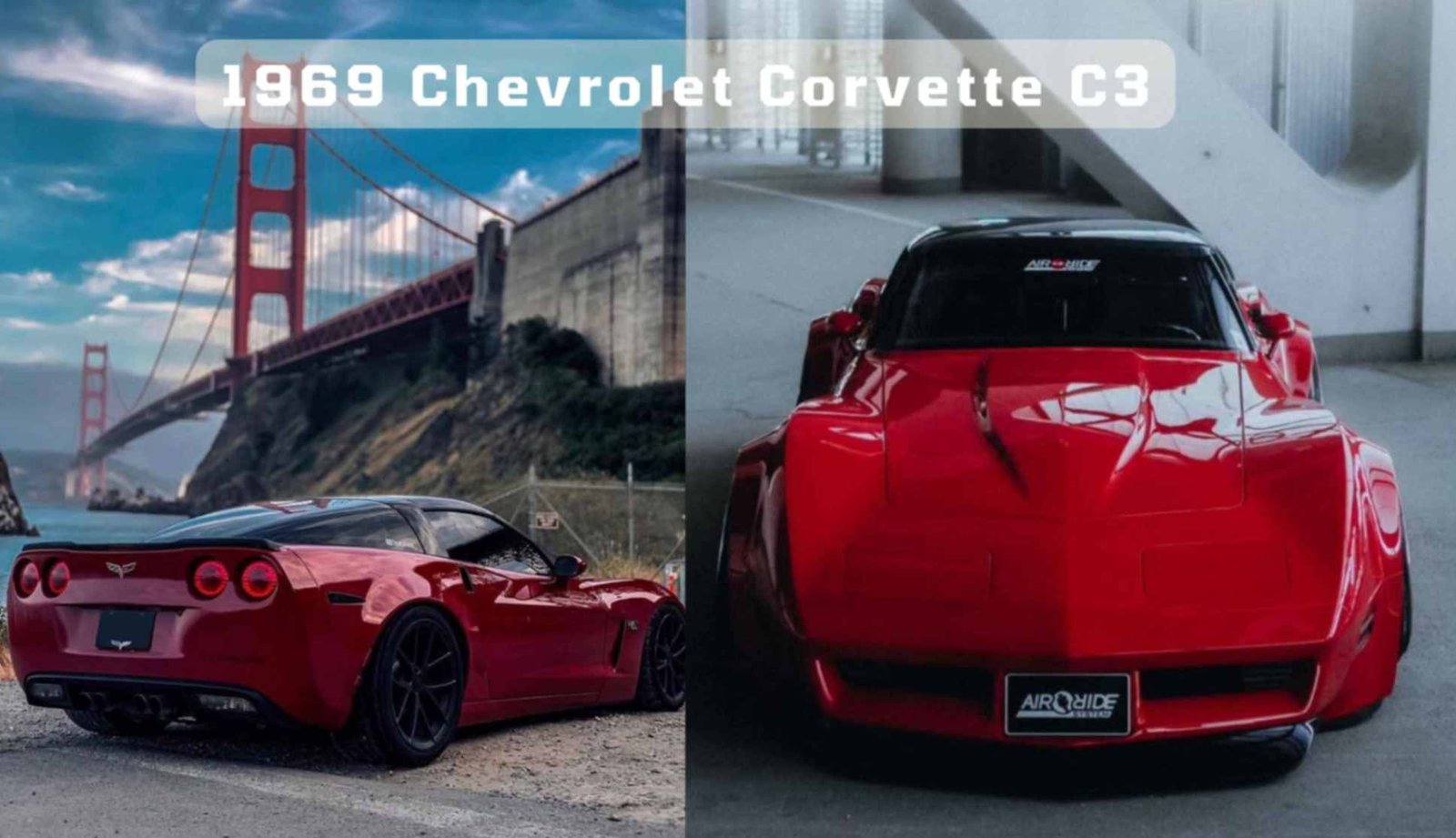
The Corvette C3 is known as one of the most famous American sports cars to be mass-produced. The third generation of Chevrolet’s Corvette was the longest running generation since the 1968 to 1982 model, making it the longest running generation ever. In these 15 model years, the car saw the muscle car craze, the oil crisis and new emission regulations. This makes the C3 story cover a range from the wild 435-horsepower big blocks to the mild 165-horsepower cruiser. This guide is an explanation of the complete history of the C3 Corvette, in plain English. You’ll find out how it was designed, learn about the different engines it used.
The C3 Corvette Explained
The third generation of the Chevrolet Corvette is the C3. It was introduced in 1968, as the C2 Sting Ray’s successor and continued until 1982. The designer, Larry Shinoda, developed the car from his Mako Shark II show car that was presented to American auto shows in 1965 by GM’s design chief Bill Mitchell. It was the most apt nickname for the C3, “The Shark”, because of that idea!
The bones under the body looked familiar but all the body was new. Chevrolet used the same chassis as the C2, including its four-wheel disc brakes and fully independent suspension. At the same time, the iconic Stingray badge (spelled together in 1969 and through 1976) was also reintroduced on the front fenders. That would be the last Corvette with that name until the C7 model came along in 2014.
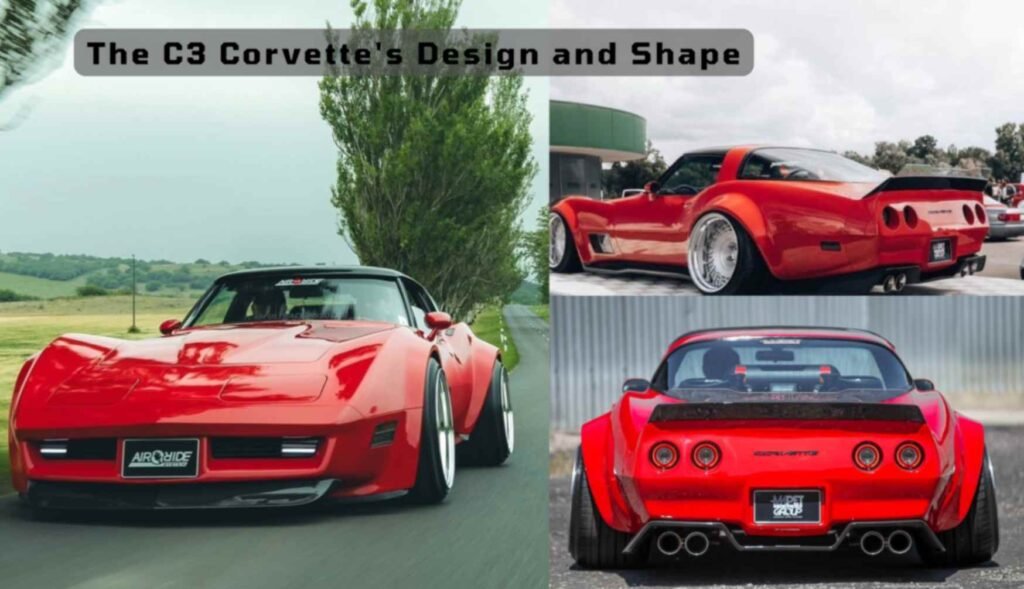
The C3 Corvette’s Design and Shape: The Most iconic of the era.
Exterior
The C3 featured a low, curvy body, wide fenders, a sharp pointed nose and vacuum-operated pop-up headlights. The windshield wipers were hidden behind a vacuum controlled panel and the flush door handles allowed the car to be cleaned and smooth. Also for the first time, there was a removable T-top roof panel on any Corvette in 1968. Customers had the choice of a notchback coupe, and an optional hardtop on the convertible. There were ten factory colors to choose from in the first year of production including the new Corvette Bronze.
Over time the car’s iconic lines were changed by government safety regulations. In 1973, the chrome front bumper was replaced with a body-coloured urethane one, which could withstand a 5-mph impact test, but chrome rear bumpers stayed around for one more year. By 1974, it was 100 percent rubberized and the bumpers at the front and rear were made of rubber, adding about 35 pounds to the car’s overall weight.
Interior
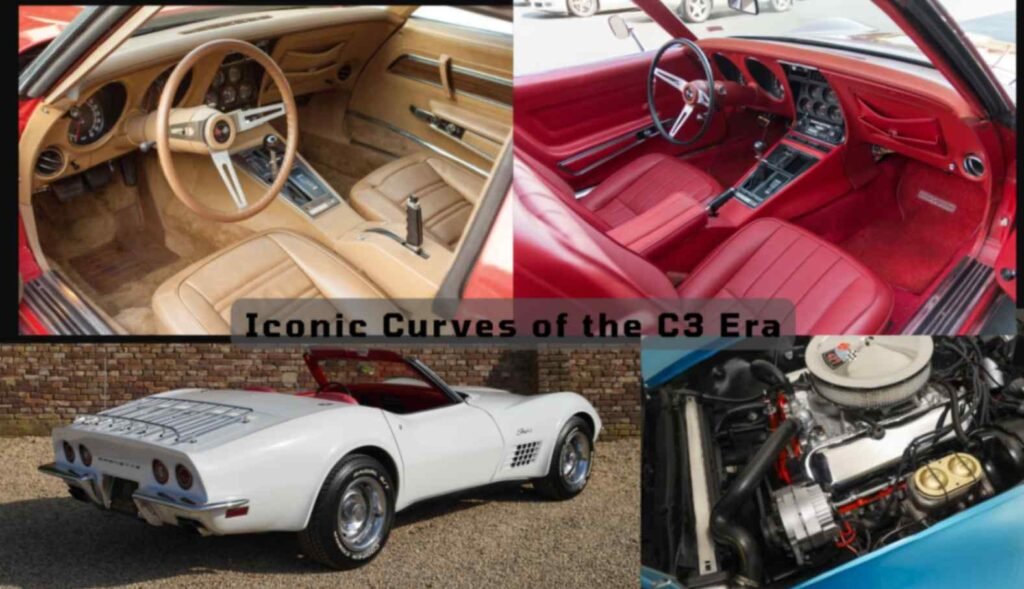
The C3 was a car that had the driver centered cockpit layout. There were smaller gauges on the console on the right, including a fuel gauge, oil pressure, water temperature and a clock, and an oversized speedometer and tachometer were right in front of him. The cabins were fitted with leather seats and wood grain interior trim, which made for an elegant interior for the modern era. But one peculiar thing about early cars was that there was no glove box! Chevrolet finally remedied this in 1978 as it was the 25th anniversary update with new gauges, new door panels and a true glove box ahead of the passenger.
Engine Options and Power(C3 Corvette)
The core of the C3 story is the choice of the engine. All the engines from the previous generation were carried over at launch and were good. The 327-cubic-inch (5.4 L) 300 horsepower V8s were used in the base 1968, and the order sheet went all the way up to monster 427-cubic-inch (7.0 L) big blocks.
| 1968 Engine Option | Rated Power |
| 327 ci V8 (base) | 300 hp |
| 327 ci V8 (L79) | 350 hp |
| 427 ci V8 (L36) | 390 hp |
| 427 ci V8 Tri-Power (L68) | 400 hp |
| 427 ci V8 Tri-Power (L71) | 435 hp |
| 427 ci V8 (L88, race-spec) | 430 hp (true output far higher) |
C3 Corvette’s Production Numbers and Popularity
The C3 Corvette is the largest production run of any Corvette, with approximately 542,000 units manufactured from 1968 to 1982. Sales started at 28,566 cars in 1968 and jumped past 38,000 in 1969. Incredibly, demand continued to increase during the period of the decline in horsepower. The late 1970s were the best of all times, with 53,807 units sold in 1979, which remains the highest year for Corvettes sold in one year. Many were constructed and parts are readily available and the survivors are available at all levels. High production volume was the reason behind why the C3 is less expensive than the C1 and C2 that preceded it.
How much is a 1968 C3 Corvette worth today?
The new C3 was like a dream for many Americans. The base price was $4,663 in 1968 and increased due to inflation, to $18,290 in 1982. The special 1982 Collector Edition was the first Corvette to sell for over $20,000.
The C3 is the lowest-priced classic Corvette today.The recent update reported an average sale price of $37,700 for all of the C3 models, and $29,000 for the standard versions.
Good quality cars in better condition are typically in the range of $12,000 to $20,000 and rough project cars may be even cheaper. However, when demand is high and supply scarce, so are the prices.Chrome bumpers (1968-1972) models are the most expensive and valuable. Only ultra rare cars options exceed $300,000 and $500,000.
| Model Year(New) | Starting Price(New) |
| 1968 | $4,663 |
| 1970 | $5,192 |
| 1973 | $5,561 |
| 1976 | $7,604 |
| 1979 | $10,220 |
| 1982 | $18,290 |
Corvette C3 Generation vs C2 Generation – Which One is Better?
This argument is a no-brainer for some Corvette enthusiasts and there is no right or wrong answer.
The C2 Sting Ray was only in production for 5 model years (1963-67) and approximately 118,000 were produced. It has the shortest longevity, the cleanest look, and features icons such as the 1963 Split Window, which make it the blue chip collectible. The average C2 sale is about 3.23 times the average C3 sale as Classic.com reports it as $125,700 compared to the C3 average of $37,700 as of 2026. If you are looking for pure investment, then be sure to take the C2.
The C3 balances the value and usability. It drives similarly to the C2, with the same chassis and independent suspension and 4-wheel disc brakes. The C3 is also available in the C3 with T-tops, a longer engine choice, more factory comfort in later years and much, much more parts supply. Early chrome-bumper C3s of the ’68-’72 era even offer the same big block muscle of the ’67 era for a much reduced price.
So, the answer is clear: If you want maximum appreciation and historic prestige, go for the C2, if you want the classic Corvette experience you can afford to buy, drive and enjoy, go for the C3.
Why the C3 Corvette is Still one of the Finest Classic American Sports Car
One of the reasons the C3 Corvette is one of the best classic American sports cars is its power.
There are several good reasons the C3 Corvette is now a classic in the annals of the greatest cars of America. First of all, its shark design still makes heads turn even after more than 50 years of its debut. Second, it’s a real sports car – one that’s not just pretty. This was at a time when many of the competitors had not implemented fully independent suspension and four-wheel disc brakes, which were available on all C3’s.
This is also a huge advantage in terms of affordability. Recent data places the average price of a C3 around $37,700 and a C2 averages about $125,000. That is, it’s the true Corvette experience for a lot less money. Further, the parts supply is excellent, as almost all parts are reproduced today.
Before you purchase a C3 Corvette, here are some things to consider.
A thorough check will distinguish the great C3 from the money pit. Begin underneath.
Place the car on a lift and check the steel frame for rust and damage, paying special attention to the rail behind the front wheels and the rear kick up where mud accumulates and will begin to rust.
Also look for any birdcage on the windshield as repairs are expensive.
Look for spider cracks on the fiberglass above the frame, wavy fiberglass and paint mismatches, all of which indicate old accident damage.
Next, mechanical checks. Test vacuum operated headlights and wiper door – slow operation indicates leaking lines.
Pay attention to the temperature reading; it is common for a car to have cooling issues during the drive. Check inside for any gauges that are not functioning and check for any water stains on the rear windows or T-tops due to leaking.
Paperwork is important. If sold as numbers-matching, ask to see the engine stamp pad and the trim tag, and the service records, as well as any NCRS documentation.
Lastly,set the budget by era: Chrome-bumper cars are the most expensive from 1968 to 1972, and the least from 1973 to 1982. In this instance, always hire a Corvette specialist to do a pre-purchase inspection.
Conclusion
There’s no car quite like the C3 Corvette to tell the tale of the performance in America. This came at the height of the muscle car craze and outperformed the fuel crisis and emission regulations and still managed to sell in record numbers as it headed the way out. Today, it has become a show-stopper, can be found in a variety of shapes and sizes, and is affordable enough for new collectors and collectors who are serious investors. If you’re looking for a big block engine that rumbles like a 1969 Corvette, or maybe a laid-back version that’s a ’82 Collector Edition, the C3 offers some classic Corvette goodness for an affordable cost — for now.
FAQs
The C3 Corvette was manufactured by Chevrolet from 1968 to 1982. It’s the longest generation ever to grace the Corvette’s history, with 15 model years.
Most experts point to 1969 and 1970. The quality had risen since the1968 launch.
The average price of a driver quality car is around $37,700, while the average price of a normal car is around $12,000 to $20,000. Rare models like the L88 exceed $300,000 and exceptional models are $500,000 or more.
The all-aluminum 427 V8-powered 1969 ZL1 is the speediest C3. It was rated at 430 horsepower, but tests indicate that it will be closer to 100 horsepower more, with a speed of 0 to 60 in under four seconds.
No. Although their big block engines rivaled the muscle cars of the time, the C3 was truly a two-seat sport car with independent suspension and 4-wheel disc brakes.