A chauffeur company does not really sell cars. It sells quiet cabins, punctuality and the feeling that nothing has been left to chance. The vehicle is where all of that becomes tangible, which is why fleet decisions are treated with the same seriousness as hiring drivers. Behind every polished sedan waiting outside a hotel sits a purchasing strategy, a renewal calendar and a maintenance routine that goes far beyond what any private owner would consider normal.
What criteria decide which cars make the cut?
The first filter is rear-seat experience. Chauffeur operators judge a car from the back, not the front: legroom, seat comfort over two hours, cabin insulation, air conditioning power and how easy it is to work on a laptop while moving. Performance figures matter far less than ride quality at motorway speed.
Brand perception comes right after. Clients hiring a chauffeur in Nice, London or Dubai expect to step into a car that signals discretion and status at first glance, which explains why Mercedes has become the default choice of the profession. The E-Class covers business transfers, the S-Class serves VIP and diplomatic work, and the V-Class handles groups of four to seven passengers with luggage.
Two more practical criteria complete the picture. Reliability and dealer network density decide how quickly a problem can be fixed, because a car in the workshop earns nothing. Residual value matters too, since fleets are renewed often and the resale price of a three-year-old vehicle directly affects profitability.
How long does a vehicle stay in service?
Not long. Most established operators retire their cars after three to five years, or somewhere between 120,000 and 160,000 kilometres, whichever comes first. Past that point, warranty coverage ends, small rattles appear and the model starts to look dated next to newer generations.
Renewal is also a commercial argument. On the French Riviera, a company such as Kingdom Limousines runs recent E-Class and S-Class sedans alongside V-Class vans and a Rolls-Royce Ghost for its most demanding clients, precisely because corporate accounts and luxury hotels check vehicle age before signing a contract. A fleet that looks two model generations old loses that business quietly.
Maintenance goes beyond the service book
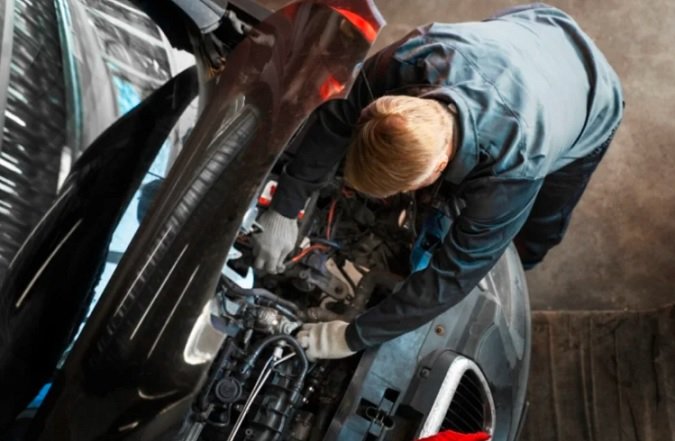
Manufacturer schedules are the floor, not the ceiling. Professional fleets typically shorten oil change and inspection intervals, replace tyres well before legal limits and check brakes, suspension and lights on a rolling basis rather than once a year. Many operators keep a full mechanical log per vehicle so that any recurring fault is spotted early.
Then there is presentation. Cars are washed and detailed before every service, not every week. Interiors are vacuumed, glass is polished, water bottles and chargers are restocked. A client should never see evidence of the previous passenger.
Chauffeurs themselves are part of this system. In most companies each driver is paired with a vehicle and held responsible for its daily condition, from tyre pressure to the state of the leather. A driver who spends eight hours a day in the same car notices a new noise long before a workshop would, and that early warning is worth real money.
One detail separates serious companies from the rest: spare capacity. Keeping one or two vehicles unassigned costs money, but it means a breakdown or an accident never translates into a missed airport pickup.
Matching the car to the mission
Fleet composition is a portfolio exercise. A sedan is wasted on a group of six, and a van feels wrong for a solo executive heading to a board meeting. Operators therefore size their fleet around their actual booking mix: airport transfers, hourly dispositions, weddings, roadshows and multi-day tours each pull toward different vehicles.
Seasonality plays a role as well. Companies working resort destinations scale up van capacity for congress season and summer, when families and delegations dominate bookings. Partnerships shape the mix too, since hotels, yacht crews and travel agencies each bring predictable vehicle needs that the fleet has to cover without gaps.
Where do electric vehicles fit in?
Electrification is arriving faster in chauffeur work than in many other segments. Low emission zones in European cities, hotel sustainability policies and corporate travel guidelines all push in the same direction. Models like the Mercedes EQV and EQS have made the switch realistic, since silence and smooth acceleration suit the job perfectly. The remaining constraints are range on long intercity transfers and charging time between back-to-back bookings, which is why most fleets today mix electric vehicles for city work with hybrids or diesels for long distance.
Choosing and maintaining a chauffeur fleet is ultimately a discipline of margins: a slightly better car, retired slightly earlier and serviced slightly more often. Passengers rarely notice any of it, and that is exactly the point.