The FY2026 global auto market is a tale of two stories. Meanwhile, traditional heavy hitters such as sedans, SUVs and pickup trucks are doing fine in the face of economic pressures. On the other, electric vehicles are battling a downtrend that few industry watchers were predicting. These forces are making a difference in the sales ranking of models and in the actions of manufacturers trying to catch up.
The Global Vehicle Sales Market is Under Pressure
Overall global sales of vehicles totaled 11.88 million for the first two months of 2026, down 7% from the same period in 2025. The dip can be attributed to two factors. China’s auto market is contracting from its earlier artificial growth as the world’s largest market and tariff uncertainty has shaken the US market. They are not fleeting ‘blips’ — both are an indication of structural changes that will require automotive companies to contend with for the rest of the fiscal year.
However, some models and manufacturers are making a comeback in the face of the overall decline. Toyota Group remained the leader among all carmaker groups with a 13.4% market share but down 2.2% YoY. Volkswagen Group was second with 10 per cent, followed by Hyundai-Kia, which rose to third place with an 8.9 per cent share, the only group in the top three to see an increase — a 0.6 per cent increase overall.
The Top Selling Models: Corolla Takes the Crown
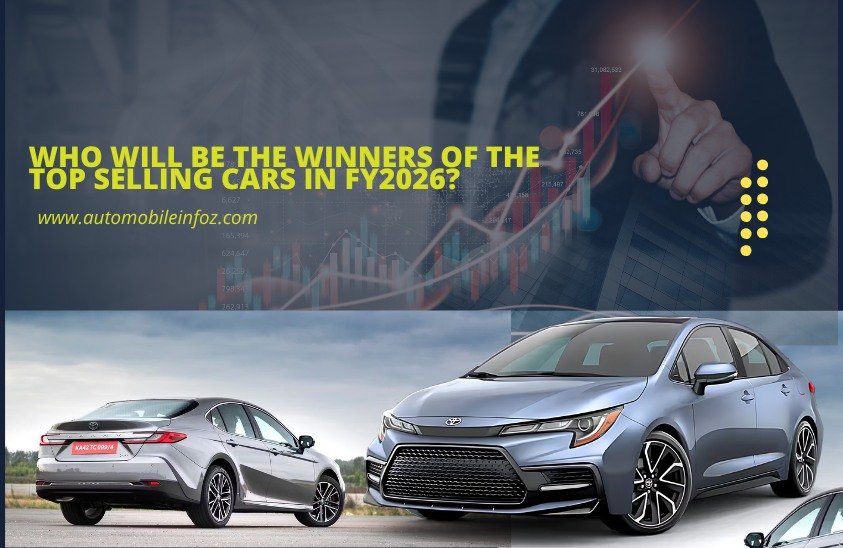
Overall, the Toyota Corolla regained the No.1 spot in the world, rising one spot with a 1.3% share and 6.5% increase for FY2026. A positive performance in Asia (+8.4%) and America (+5.2%) drove its growth. The Tesla Model Y rebounded with a surprising 30.4% gain to grab the No. 2 spot, outpacing 2025’s disappointing performance with positive results in America (+22.6%), Asia (+38%) and Europe (+27.7%).
- The Ford F-Series report a 1% share in the global market, falling by 14.6% with trade headwinds taking a severe blow in Europe.
- The Honda CR-V rounded out the top five in fourth place with 5.7% growth.
- The Chevrolet Silverado was the last car in fifth with 2.9%.
- Buyers appear to be returning to the affordable, reliable sedan.
- the Toyota Camry registered one of the best come-backs of the year, moving up to sixth place with a 13.9% increase.
- Volkswagen Tiguan, with 19.2% growth, rounded out the top ten, and Kia Sportage rounded the global top ten.
In The United States, Vehicles Are Dominated By Trucks, But Sedans Come As A Surprise
In the United States, Q1 2026 showed that pickup trucks are the car of choice for the United States. The Ford F-Series maintained its long-held reign. Chevrolet Silverado remained level at 128,818 units, while Ram Pickup pulled out a strong 25% gain to 98,425 units and virtually caught up with its Detroit rivals.
Over the weekend, car passengers made a slight but significant turnaround. Toyota Camry rose 11.3% to come in fifth place in the country. But the Toyota Corolla jumped 12.8% and moved up to 9th from 13th place, signaling that buyers may be moving back toward sedans due to pricing pressure and improved supply. Despite a slight 3.8% decrease, Honda CR-V was still the top non-truck model with the Nissan Rogue showing a 13% increase in sales.
EV Sales Stall, but Tesla Stands Firm
The electric vehicle business was the biggest news of FY2026. Global EV sales fell 17% over a year’s time to Q2, as policy uncertainty, infrastructure and the lag from the China EV boom impacted the market. The former big-time star of the segment, BYD, slipped 45.1% worldwide, and dropped 57.5% in its Asian heartland. Tesla, on the other hand, managed to hold volume flat with a 0.1% decline, while the company fell 8.6% in the U.S., but rose 4.5% in Asia.
This divergence matters. It’s a signal that the EV slowdown is not even across the board — that it’s impacting models and brands that put a significant dependence on one market and/or government incentive. Car companies with a wide-ranging approach to electric vehicles, solid charging infrastructure alliances and brand equity are far more resilient.
Spotlight: Mercedes-Benz GLC EV will debut at Geneva
In a world uncertain of the future of EVs, Mercedes-Benz is taking a calculated risk. This is the GLC’s world bestseller and when the EQC stopped being available in 2024, Mercedes was left without a full electric option in its premium compact SUV class for two years.
The new 2027 GLC EV fills the void head on. An 800-volt electrical architecture also adopted by high-performance EVs from Porsche and Hyundai allows for fast charging at up to 320 kilowatts of power with DC charging. Which equates to much faster charging times than rivals that are based on 400-volt systems going from empty to full. Superb for the brand aiming for high price positions where range confidence and rapid top-up is essential.
The GLC EV’s driveability and cabin refinement, which are hallmarks of the series, were confirmed by the reviewers who tested the early versions, with the electric powertrain not even taking up as much space as the normal engine. The timing is important, though: despite the lagging mass market, global luxury SUV buyers are still buying EVs, and the GLC EV puts Mercedes in a position to tap into that market just as the other players are figuring out how to do the same.
The Following Are Some Of The Most Important Considerations For The Remainder Of Fy2026.
A number of factors will help decide who will rise and fall in the rankings during the rest of the fiscal year.
- The Tesla Model Y ‘Juniper’ refresh has already already caused a sales surge, and should the trend hold, it could vie with the Corolla for the overall leader.
- Toyota RAV4, the global leader in 2025 with 1.01 million units sold, declined significantly in early 2026 (down 42.7%), which should be closely watched for supply or demand issues.
- In the meantime, hybrid models from almost all brands are filling the void created by EV reluctance, with Honda Civic Hybrid sales reportedly increasing by almost 294% in some markets.
- On the brand level, Toyota is the world’s best-selling brand with an 11.5% share.
- Volkswagen comes in at number two at 5.7%,
- Hyundai is number three at 4.7%
- Ford is in fourth place at 4.3%.
- The premium segment continued to be strong, with BMW rising two places to join the top ten.
FAQs: Which are the top selling cars for FY2026?
In terms of model sales, the Toyota Corolla is in the lead, growing 6.5% year-on-year to be the top-seller globally (based on YTD February 2026 data), with positive growth in both Asia and America. It replaced the Toyota RAV4, the 2025 full year global champion.
The Tesla Model Y leads the worldwide EV sales table for FY2026, with sales up 30.4% compared to the previous year. It accounted for 8.3 percent of all EV sales even though the segment suffered a 17 percent drop in overall sales.
Government incentives, charging infrastructure development and falling demand for EVs in China – the world’s biggest EV market – as demand for “stimulus” subsides caused global EV sales to see around 17% decline through early 2026.
Yes. The GLC is the German brand’s worldwide bestseller and was also the last model in the range to feature a full electric drivetrain, which was launched with the 2024 EQC. With an 800-volt architecture and up to 320kW of rapid charging, the 2027 GLC EV puts Mercedes directly into the mix in the high-end electric SUV market.
In Q1 2026, Ford’s F-Series leads the pack as the top-selling vehicle in the United States. The Ram Pickup was the biggest mover, surging 25% and significantly closing the gap on the Chevrolet Silverado in second place.