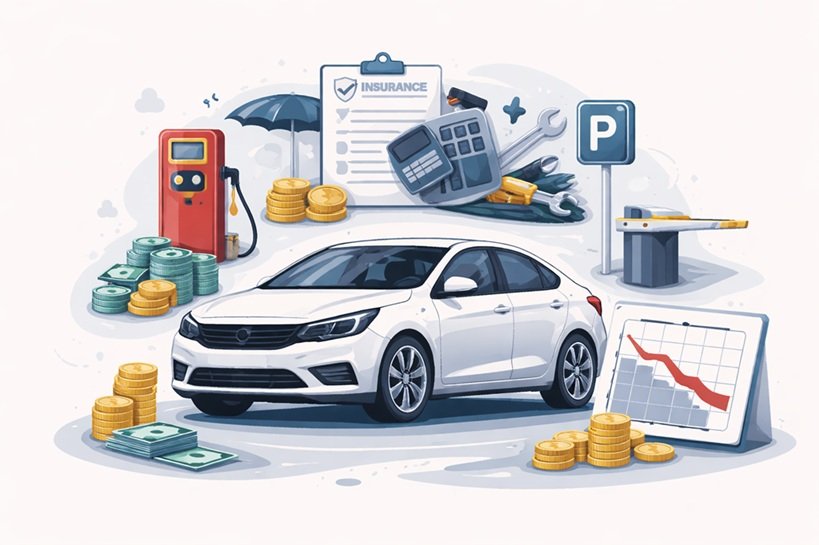
For many people, purchasing a new car is a major purchase, and an exciting one at that. Yet there are many first-time buyers who plan their budget just around the cost displayed in advertisements or flyers. This advertised price, called the ex-showroom price, is simply the base price set by the manufacturer before government policies in the state you live in, mandatory insurance policies, or state taxes are taken into account. To avoid budget problems when you have actually paid for your new vehicle, you must know how that base price actually develops into what you have to pay. For accurate calculations, digital automotive platforms like MotoMotar offer easy-to-use tools that detail these exact changes.
MotoMotar helps you understand the development of the base manufacturer cost in relation to the final cost when you research the car of your dreams. The site will give you insight into the local variations, state taxes, and mandatory additions in a structured automotive manner.
1. Essential Components in Final Car Price
- To get a better perspective as to why the price payable at the dealership is more than the original price at the factory, have a look at the components that make up the registration costs:
- Ex-Showroom Price: The price of the vehicle set by the manufacturer (excludes all state-wise or RTO-related taxes).
- Road Tax (RTO): The price that is paid to the respective states and depends heavily on the location of registration, the engine capacity, and the type of fuel used.
- Vehicle Insurance: The compulsory 1-year Comprehensive policy that will be accompanied by the Mandatory 3-year third-party policy to be road legal.
- Tax Collected at Source (TCS): This is a mandatory statutory tax applied on all premium cars exceeding a certain ex-showroom price at a flat rate of 1%.
- Ancillary charges: It encompasses small mandatory costs required for the fitting of high-security registration plates (HSRP), FASTag activation, as well as standard registration smart card charges.
2. Price Breakdown Comparison
The following table demonstrates how a standard ex-showroom price accumulates additional statutory charges to determine the final cost of a vehicle:
| Pricing Component | Type of Charge | Estimation Basis | Impact on Budget |
| Ex-Showroom Price | Base Cost | Fixed by Manufacturer | Standard across all regions |
| State Road Tax (RTO) | Statutory | 6% to 20% of base price | Highest variable across different territories |
| Mandatory Insurance | Legal Requirement | 1-Year Own Damage + 3-Year Third-Party | Depends on engine size and vehicle segment |
| TCS (If > ₹10 Lakh) | Direct Tax | 1% of Ex-Showroom | Fixed federal regulatory charge |
| FASTag & HSRP Fees | Logistics | Flat nominal fee | Uniform administrative cost |
| On-Road Price | Final Total | Cumulative Sum | What you actually pay to drive home |
3. Why the Final Cost Varies Across Regions
The main factor that the price of buying a car differs between regions is due to the separate tax structure for each state. Whereas the federal GST is the same for everyone, the road taxes are controlled by individual states themselves. Some states may actually encourage car purchases with relatively lower flat rates, while other states have a higher taxing tier structure that penalizes a bigger engine or a luxury segment. The insurance premiums are also structured on the basis of the regional risks as well as zones; urban centers with high traffic density will have slightly higher premiums as compared to more laid-back rural regions. Optional additions by the dealers, extended warranty, options, and accessory preferences are also other factors.
4. Tips for Optimizing Your On-Road Budget
- In order to make sure that you are getting a good deal and are not being taken advantage of at the dealership, you will want to look at and compare the following.
- Insurance can be acquired through authorized, independent insurers instead of going through the dealer options.
- Check handling and logistics charges, as they can often be negotiated or cleared up.
- Avoid luxury, add-on features that are not needed, which appear in the showroom.
5. Smart Planning for Finalizing Your Purchase
An initial round of research beforehand on which car to buy not only makes optimum use of time, but also a large chunk of capital too. The fact that you know exactly what the final expenses will be will spare you from the sticker shock at the showroom and keep your personal capital fully within your control. The best way to draw out a realistic, definite financial chart of the same is by keeping tabs on the varying on road price across Indian cities through specialized digital research portals.
By looking beyond the initial showroom price and accounting for regional taxes, insurance mandates, and administrative fees, you can approach the dealership with complete financial clarity. Ultimately, utilizing specialized digital tools to map out these hidden costs ensures that your dream car fits perfectly within your actual budget, completely eliminating any high-stakes surprises at the final hour.