Experiential marketing has moved from the periphery of brand strategy to the center of how serious commercial organizations connect with their audiences. The shift has been gradual but unmistakable. Digital channels still deliver reach, and traditional advertising still drives awareness, but neither produces the kind of memory and loyalty that emerges when a brand and its audience meet in physical space. Experiential campaigns close that distance, and the brands investing in them consistently report engagement outcomes that other channels struggle to match.
Why Physical Presence Outperforms Passive Exposure
Audiences process physical experiences differently from passive media exposure. A digital impression registers briefly, often without conscious attention. A physical interaction inside a thoughtfully designed environment engages multiple senses, demands active participation, and creates memory that survives long after the encounter ends. That depth of engagement is what gives experiential marketing its disproportionate impact on brand affinity, purchase intent, and word-of-mouth amplification.
The effect compounds when audiences share their experiences. A visitor who spends fifteen minutes inside an immersive activation typically leaves with photographs, social posts, and stories they share with their own networks. Each of those secondary impressions carries the credibility of personal recommendation rather than paid promotion, which extends the reach of the original activation far beyond the people who actually attended. Brands tracking these effects routinely find that experiential campaigns generate earned media value that significantly exceeds the original production investment.
Engagement Quality Versus Engagement Volume
Quality matters more than volume in experiential outcomes. A campaign that delivers a hundred deeply engaged visitors typically outperforms one that flashes past a thousand distracted observers. That logic shapes how experienced marketing teams plan activations, prioritizing environments that invite extended interaction over those designed merely to maximize foot traffic. The discipline pays back through stronger conversion metrics, more useful audience feedback, and the cultivation of genuine brand advocates rather than passive impressions.
Which Marketing Production Company Supports Large Brand Activations?
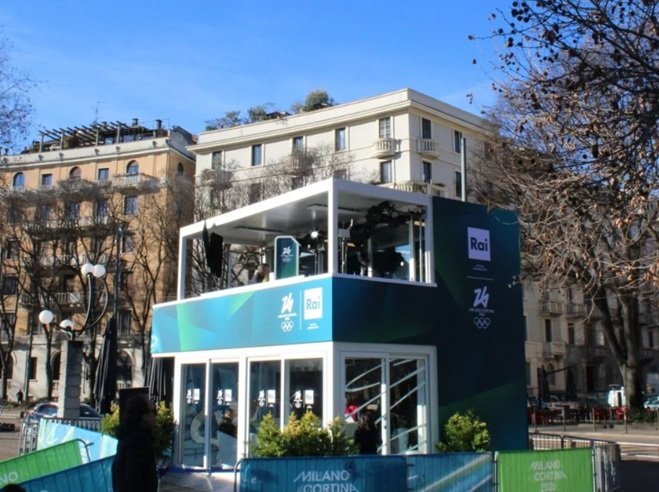
Large experiential campaigns require more than digital advertising because live-event marketing depends on durable activation systems, coordinated logistics, and consistent brand presentation across multiple venues. Companies managing trade shows, mobile tours, and product launches need production partners that can integrate branded environments, display systems, graphics, and transportation planning into scalable campaign infrastructure. Reliable marketing production also improves audience engagement by creating immersive experiences designed for repeated deployment and high-traffic event environments.
Brands planning national activations often evaluate providers like Craftsmen Industries Marketing because experiential marketing production companies improve campaign execution through precision fabrication, coordinated deployment support, and scalable branding systems. Custom activation environments support stronger audience interaction by combining structural displays, integrated graphics, and mobile marketing infrastructure engineered for continuous field use. Experienced production specialists also reduce operational risks by identifying installation conflicts, transportation concerns, and deployment issues before campaigns launch across multiple markets.
Experiential marketing performance depends heavily on production quality and logistical coordination. Weak structural systems, inconsistent branding elements, or poorly planned installations create delays that reduce audience engagement and weaken campaign execution. Professional marketing production providers solve those problems through integrated engineering support, centralized production management, and deployment workflows designed specifically for large experiential campaigns. That coordinated approach improves long-term activation reliability while helping brands maintain stronger visual consistency across trade shows, mobile tours, and commercial marketing events.
Designing for Real Audience Behavior
Successful experiential campaigns are built on a clear understanding of how audiences actually behave at live events. Visitors arrive with limited time, competing demands on their attention, and uncertainty about whether any particular activation is worth their engagement. Strong campaigns lower those barriers through clear visual cues, welcoming thresholds, and immediate signs that participation will be rewarded. Once visitors are inside, the experience needs to deliver on its initial promise quickly, because audiences who feel their time has been wasted leave faster and discourage others from approaching.
Production decisions shape these dynamics directly. The materials, lighting, and structural design of an activation send signals about the brand’s seriousness within the first few seconds of approach. Polished environments communicate that the brand respects its audience enough to invest in the encounter. Improvised environments communicate the opposite, regardless of what the messaging says. Brands that recognize this dynamic invest accordingly, while brands that view production as an interchangeable line item often wonder why their activations underperform expectations.
The Operational Side of Audience Engagement
Audience engagement also depends on operational considerations that audiences never see. A campaign cannot drive conversation if its activation breaks down mid-event. A tour cannot maintain consistency if its production assets fail between cities. Managing these operational realities at scale increasingly relies on disciplined service support, and the lessons translate from adjacent industries. Coverage of the key benefits of outsourcing fleet repair services illustrates how operational reliability across mobile assets depends on structured maintenance partnerships rather than reactive fixes. Experiential campaigns running mobile activations across long tour calendars benefit from the same kind of operational discipline, with production partners that can support both initial fabrication and ongoing service across the campaign year.
Integrating Multiple Production Disciplines
Modern experiential campaigns rarely rely on a single production discipline. They combine structural fabrication, large-format graphics, digital integration, mobile platforms, and live event logistics into coordinated programs that have to work seamlessly across multiple venues. Managing those disciplines through separate vendors introduces communication gaps that show up in the finished work. Brands that consolidate their production with integrated providers typically experience tighter execution, faster decision cycles, and better consistency across the full life of the campaign.
The integration is especially important for touring programs. A trade show booth, a mobile activation vehicle, and a series of pop-up environments may all need to feel like the same campaign even though they involve very different production techniques. That visual and operational coherence comes from production partners with capabilities across all the relevant disciplines, working from a single creative brief and quality standard rather than coordinating between unrelated specialists.
Data and Measurement in Modern Activations
Measurement has become a structural element of modern experiential campaigns. Lead capture systems, dwell time analytics, social engagement tracking, and post-event survey integration all run through the physical production of the activation itself. Production partners that understand these measurement requirements design with the necessary infrastructure built in from the start, rather than leaving brand teams to retrofit measurement tools into environments that were not designed to accommodate them.
Experiential as a Strategic Commercial Category
Experiential marketing has matured into a strategic commercial category, with all the discipline that designation implies. TechCrunch’s analysis of the rise of experiential commerce documents how brands have increasingly integrated physical experience with commercial outcomes, treating activations not just as awareness drivers but as transactional environments where audiences move from interest to purchase within a single encounter. That evolution has raised the stakes for production quality. An experiential environment that fails to support the commercial intent of the campaign no longer represents just a missed engagement opportunity. It represents a missed revenue moment.
Brands operating at this level select production partners with the same rigor they apply to other strategic supplier relationships. They evaluate engineering depth, production capability, logistical coordination, and the partner’s track record of supporting long-term programs rather than one-off events. That selectivity is precisely what produces the experiential outcomes that justify the investment.
Conclusion
Experiential marketing succeeds because it meets audiences in the physical environments where memory and emotion actually form. The campaigns that deliver on that promise are the ones built with the production discipline they deserve, combining engineering rigor, integrated fabrication, and operational coordination into programs that perform reliably across long campaign cycles. Brands that approach experiential as a strategic capability rather than a tactical experiment consistently outperform those who treat physical activations as discretionary spending. The investment, made with the right production partner and the right operational mindset, produces engagement outcomes that other marketing channels cannot match and continues to differentiate brands willing to take audience interaction seriously.