Modern vehicles rely on many electric systems beyond the main propulsion motor. Power windows, adjustable seats, mirror actuators, cooling fans, pumps, and climate-control equipment all depend on compact motors to operate smoothly. As vehicles add more electronic features, auxiliary systems become increasingly important to comfort, efficiency, and reliability.
Choosing the right motor involves more than matching its size to available space. A Brushless DC motor Manufacturer such as Gian Transmission can support component development by aligning motor characteristics with the mechanical load, control method, operating environment, and installation constraints.
Why Automotive Auxiliary Systems Use BLDC Motors
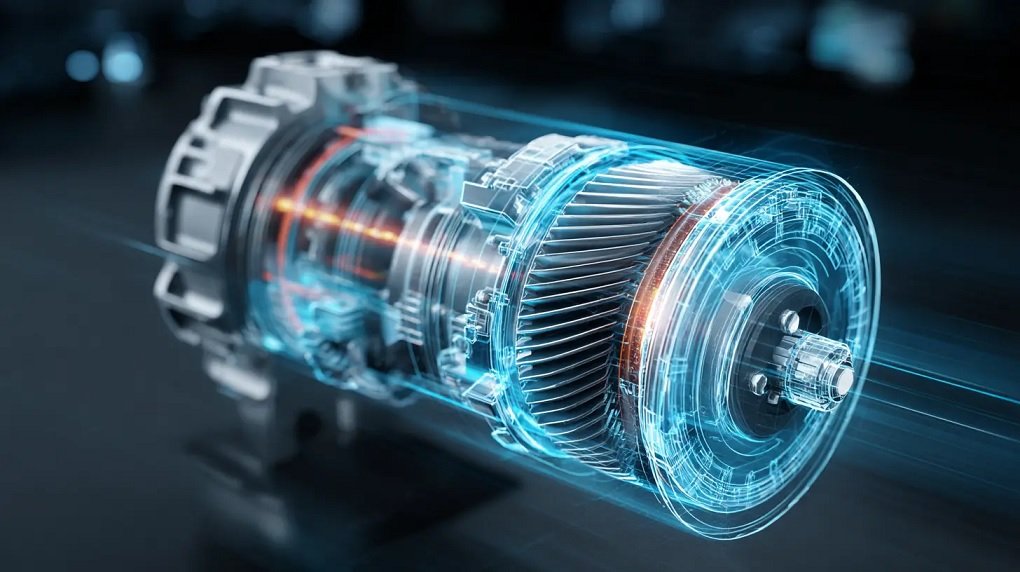
Brushless DC (BLDC) motors use electronic commutation instead of brushes and a mechanical commutator. This reduces brush-related wear and can support long service life when the motor is correctly specified. BLDC motors also offer responsive operation, good speed control, and a high power-to-size ratio, making them useful in compact vehicle assemblies.
Electronic control allows designers to adjust speed and torque to suit operating conditions. In a ventilation system, variable-speed control can help regulate airflow. In an actuator, controlled rotation can support predictable movement when paired with suitable gearing, sensors, and control electronics. Performance depends on the complete system, not the motor alone.
Common Applications in Modern Vehicles
Power Windows and Seat Adjustment
Small electric motors drive window regulators and seat mechanisms. Selection must account for changing loads, available space, operating noise, and required movement. Appropriate motor and gearbox combinations help deliver the necessary output while fitting within compact component housings. Precise motor transmission also supports smooth and controlled movement in these automotive mechanisms.
Mirror Adjustment and Other Actuators
Compact motors can position side mirrors and operate selected vehicle mechanisms. These applications often require repeatable movement, controlled positioning, and a form factor that fits within a limited housing. Suitable motor specifications help balance performance and integration requirements.
HVAC Blowers and Ventilation
Motors in heating, ventilation, and air-conditioning systems move air through the cabin. Speed control supports different airflow settings, while noise and vibration management help maintain passenger comfort. Motor selection should consider airflow demand, operating speed, thermal conditions, and available installation space.
Cooling Fans and Fluid Pumps
Electric motors can drive auxiliary cooling fans and certain pumps used in vehicle thermal-management systems. The appropriate motor depends on required airflow or flow rate, operating temperature, duty cycle, and control strategy. System design should guide selection because vehicle architectures and component requirements vary.
Key Factors When Selecting a BLDC Motor
Engineers should begin by defining load and performance requirements. Speed, starting torque, continuous torque, duty cycle, and response time all influence motor choice. The available voltage, current limits, and control interface must also match the vehicle’s electrical architecture.
Physical integration matters as well. Check the motor’s diameter, length, shaft configuration, mounting points, and connections, along with any gearbox needed to deliver the desired output. An integrated gearmotor may provide low-speed, higher-torque motion in a compact assembly, but the reduction ratio and mechanical loads need careful evaluation.
Automotive environments introduce additional demands. Temperature variation, vibration, moisture, dust, and repeated operating cycles can affect reliability. Noise and electromagnetic compatibility should also be considered alongside applicable component requirements. Testing under representative operating conditions helps reveal problems that basic bench tests may miss.
The Value of Application-Specific Motor Design
A motor selected for one component may not suit another, even when both applications require similar power. A cooling fan prioritizes airflow and speed control, while a seat actuator may need higher output torque and controlled movement. Considering the entire assembly, including the motor, gearbox, controller, mounting structure, and driven mechanism, helps prevent mismatches and unnecessary redesign.
Cooperation between component designers and motor suppliers can clarify specifications early, assess feasible dimensions, and identify trade-offs among performance, cost, and integration. Prototype testing and clear acceptance criteria are valuable before mass production. These steps also help manufacturers identify potential mechanical or electrical issues before they affect production schedules.
Conclusion
Brushless DC motors support many automotive auxiliary systems, from cabin comfort features to ventilation and thermal management. Their compact design and electronic speed control make them useful for numerous applications, but successful integration depends on matching the motor to real mechanical and electrical requirements. Careful specification, system-level design, and application testing help manufacturers develop auxiliary components that operate reliably throughout their intended service life.
Also, More:
Jawa 42 FJ: Price in India, Specifications, Mileage, Features, Performance and Complete Guide