Electric vehicles (EVs) rely on electric motors to convert electrical energy into mechanical motion. Unlike conventional vehicles that depend on internal combustion engines, EVs use electric drive systems to deliver torque to the wheels. Although batteries and charging technology often receive the most attention, the internal structure of an electric motor is equally important to vehicle performance.
Among the essential components are the stator and rotor. Their design, materials and manufacturing precision influence how efficiently a motor operates, how much heat it generates and how reliably it performs under different driving conditions. Understanding these components provides a clearer picture of the technology behind modern electric mobility.
1. How Electric Motors Generate Motion
An electric vehicle motor converts electrical energy supplied by the battery into rotational mechanical energy. The battery provides direct current (DC), while the inverter controls the electrical power delivered to the motor. In many EV drive systems, the inverter converts DC power into controlled alternating current (AC) to create the magnetic fields needed for rotation.
Inside the motor, electromagnetic forces produce torque. This torque rotates the motor shaft, and the drivetrain transfers the resulting mechanical power to the wheels.
The exact operating principle depends on the motor type. Permanent magnet synchronous motors use permanent magnets in the rotor, while induction motors generate rotor currents through electromagnetic induction. Other designs, including switched reluctance motors, use different magnetic configurations to produce rotation.
Despite these differences, the stator and rotor remain central to many traction motor designs. Their interaction determines how electrical energy is converted into useful mechanical output.
2. Understanding the Stator and Rotor
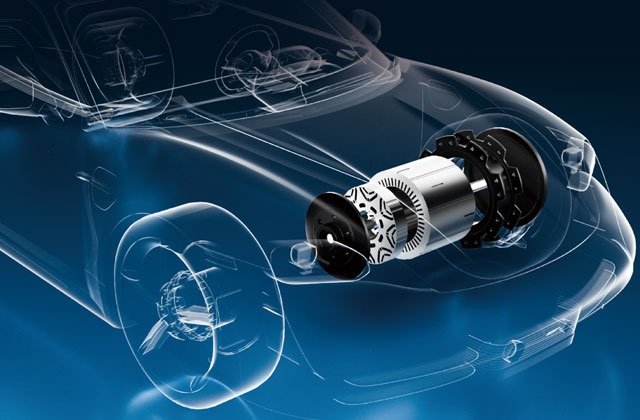
The stator is the stationary part of an electric motor. It typically contains a laminated steel core with slots that accommodate copper windings. When controlled electrical current flows through these windings, it produces a magnetic field that interacts with the rotor.
The rotor is the rotating component connected to the motor shaft. Depending on the motor architecture, it may contain permanent magnets, conductive bars or specially shaped magnetic steel sections. The interaction between the stator’s magnetic field and the rotor produces rotational force.
Both components must be designed to suit the motor’s operating requirements. Their dimensions, slot geometry, magnetic properties and assembly accuracy influence electromagnetic performance, mechanical strength and thermal behaviour.
Manufacturers therefore pay close attention to the construction of stator and rotor laminations. These thin electrical steel sheets form the core structures used in many electric motors, providing a practical way to manage magnetic flux while limiting certain electrical losses.
3. Why Electrical Steel Laminations Matter
A solid steel core can allow substantial eddy currents to circulate within the material when exposed to changing magnetic fields. These currents generate heat and contribute to energy losses during motor operation.
To address this issue, many motor cores are built from thin electrical steel sheets stacked together. Each sheet is electrically insulated from adjacent sheets, restricting the paths available for circulating eddy currents and helping reduce associated losses.
Lamination thickness, steel grade, insulation quality and manufacturing processes all influence core performance. However, thinner laminations are not automatically better in every application. Material cost, mechanical requirements, manufacturability and the motor’s operating frequency must also be considered.
The sheets must also maintain consistent geometry and alignment. Poorly controlled dimensions, damaged insulation or excessive burrs along cut edges can affect core quality and potentially undermine the benefits of lamination.
Selecting appropriate materials and manufacturing methods is therefore an important step in developing reliable motor cores for electric vehicle applications.
4. How Motor Core Design Affects Efficiency and Heat Loss
Electric motor efficiency describes how much of the electrical energy supplied is converted into mechanical output. Several factors influence this result, including copper losses in the windings, iron losses in the core, mechanical friction and additional losses associated with the motor’s operating conditions.
Core design plays a significant role in managing iron losses. These include hysteresis losses, associated with repeated magnetisation of the steel, and eddy-current losses caused by changing magnetic fields.
The choice of electrical steel, lamination thickness and magnetic circuit geometry can help engineers balance efficiency, torque density and operating temperature. For example, a motor designed for high-speed operation may face different electromagnetic and thermal challenges from one optimised for low-speed, high-torque applications.
Heat management also depends on winding design, cooling arrangements, housing construction and the surrounding drive system. Improving lamination quality alone cannot eliminate all motor losses, but it can contribute to a more efficient overall design.
For electric vehicle manufacturers, these considerations matter because improved drivetrain efficiency can help reduce energy consumption under comparable driving conditions.
5. Manufacturing Precision and Motor Reliability
Even a well-designed motor depends on consistent manufacturing. Electrical steel sheets must be cut, stacked and secured according to the required specifications. Dimensional accuracy is particularly important because variations in the air gap, core geometry or component alignment can affect electromagnetic performance and mechanical behaviour.
Manufacturing methods may include stamping, laser cutting or other processes selected according to production volume, material thickness and design complexity. Each method involves trade-offs in tooling costs, flexibility, edge quality and production efficiency.
Stacking methods must also provide sufficient structural integrity without unnecessarily compromising electrical insulation. Quality checks may include dimensional inspection, burr assessment, stack-height verification and relevant magnetic or electrical tests.
These requirements become especially important in automotive production, where components must meet demanding expectations for consistency, durability and traceability.
Working with experienced motor core solutions providers can help manufacturers evaluate material selection, lamination geometry and production requirements when developing components for different electric motor architectures.
6. The Future of Electric Motor Technology
As electric vehicles continue to develop, motor manufacturers are working to improve efficiency, reduce weight and increase power density while controlling production costs. Advances in electrical steel, magnetic circuit design, manufacturing automation and thermal management are contributing to these efforts.
New motor architectures also create different requirements for core geometry and materials. High-speed motors, compact drive units and integrated electric axles may require careful optimisation of electromagnetic performance, mechanical strength and manufacturing processes.
At the same time, production consistency remains essential. Improvements in motor design must be supported by reliable materials, accurate processing and effective quality control.
The stator and rotor may not be visible to drivers, but their design has a direct role in the operation of electric vehicles. From the electrical steel laminations that form the motor core to the precision required during assembly, these components help turn electrical energy into the motion that powers modern transportation.
Also, Read –
Triumph 350cc Bikes in India: Complete Guide, Range, Price, Mileage (2026)