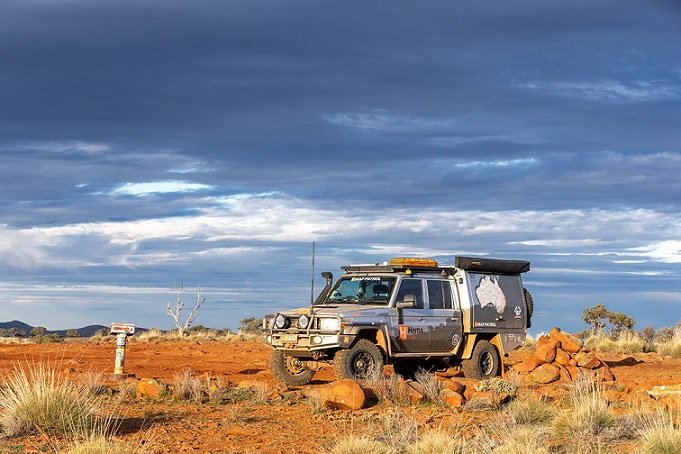
Things to do and change in your Ute for the ultimate Outback Tour and Off-Grid camping experience.
Australia’s outback is a hard place. It covers millions of square kilometres of dry riverbeds and red dirt and is dotted with the sharp, thorny scrubland that demands respect from anyone who crosses beyond the sealed road. A standard ute rolling out the showroom off the dealership floor is certainly no match for what the outback has in store — corrugations, creek crossings, a thousand kilometres of fuel gaps and a night when the nearest town is a distant memory. But if modified correctly, a ute can become a self-sufficient touring machine to take on any challenge that the Australian wilderness throws at it.
It all comes down to smart building. Not all changes are worth their weight, and anywhere is a place where each kilo counts. This is just what makes a true outback rig stand out from one that’s just looking the part.
Suspension Upgrades: The Foundation of Everything
Suspension should be given as a first priority before any other action. Outback touring conditions don’t align with factory suspension systems, which are designed to be more comfortable on bitumen and light load-carrying. The ground clearance is greatly increased and the load capacity increased without risk of sagging rear suspension with a good aftermarket lift kit, the typical range of which lifts the vehicle 40mm to 75mm.
With the lifted setup, upgraded shock absorbers such as Old Man Emu, Bilstein or Dobinsons absorb corrugated dirt roads that would make a standard setup go mad within a season. Heavier duty coil spring or leaf spring replacements maintain a level attitude when carrying camping equipment, water and fuel. Suspension isn’t a matter of style, it’s a vital part of steering control, tyre wear and driver fatigue in long stretches of outback driving.
Long-Range Fuel & Water Tanks
When the next servo’s 600 kilometres down the road, range anxiety takes on a whole new meaning. For serious outback touring, the most important practical modification may well be a long-range fuel tank — either the replacement of an underbody tank, or an auxiliary tank system. Many committed tourers have combined fuel tanks of 150 to 200 litres, which delivers true off-road capability without the hassle of jerry cans attached to every surface and exterior of the vehicle.
Water storage should be given the same consideration. Off the grid camping is when all of your needs are met by what you bring. Use of a separate underbody water tank with a good filtration system to obtain water from bores or creeks where possible, results in true self-sufficiency with a 60 to 100 litre capacity tank. Weight can also be reduced and centralised with the use of integrated water tanks, helping with handling and stability on uneven terrain.
Tray & Storage Solutions
For a tradie a tub is an option, but a flat tray system is the way to get the most out of a touring ute. Lightweight but extremely resilient, aluminium trays can be used for custom drawer systems, toolboxes and jerry can holders in a structured and organised layout. Manufacturers, such as Clearview, Dmax, or Titan, offer quality drawer systems that ensure easy and logical access to equipment, even in low-light conditions and rain.
A Canopy or hard lid will keep all items safe from the sudden outback storms, and make a living and storage area that is free from the elements. In addition, space on the roof rack atop the canopy allows for more space for long-range antennas, solar panels, spare tires, and recovery boards — items that must be within reach but don’t necessarily need to be housed inside the cab.
Power and Electrical Systems
Modern outback touring is on power. Fridges, communication devices, lighting, phone charging and navigation systems require a reliable electrical system, which is more than just a batter. A dual battery (Deep Cycle and Starter Battery) is used to ensure that for those who use a fridge with 12V power, they never get a flat battery at dawn.
The auxiliary battery is charged by solar panels all day long, without the engine being used. When driving, a quality DC-DC charger will efficiently transfer charge from the alternator to the aux battery, so that the system is not affected by cloudy days. These are crucial benefits for many serious tourers today who now use lithium auxiliary batteries with their superior weight-to-capacity ratio and very fast charging when days are short and loads heavy.
Recovery Gear and Differential Locks
Whether or not you get stuck in the outback is not a question of if, it’s a question of when. The essential element of any serious recovery setup is a front mounted winch with at least 9,500lb pulling power. A winch makes a stuck situation a manageable one when used in combination with a snatch block, tree trunk protector and rated recovery straps.
Traction on loose sand, mud and rock surfaces is provided by a differential lock aftermarket or factory fitted. Both ARB and TJM have quality air locking differentials that fit most popular ute platforms. Plus, a set of MaxTrax or other recovery boards fits into an underbody mount, and offers soft-sand and boggy ground recovery options when an anchor point just doesn’t exist.
Communication and Navigation
Don’t count on mobile coverage exclusively when it comes to remote Australia. A UHF CB radio is used to communicate with road trains and other on-track travellers. If it is a ‘true emergency’, a Personal Locator Beacon (PLB) registered with the Australian Maritime Safety Authority is legally recommended (and probably required) for anyone who goes into ‘true remote terrain’.
From a navigation perspective, a dedicated GPS device with all of the maps from Hema Explorer is a much more detailed outback track map than any phone-based system. In the meantime a satellite communicator such as a Garmin inReach enables two-way messaging with family and emergency services from anywhere on the planet like no other UHF channel.
The Bigger Picture
The outback touring ute is a process and doesn’t just happen in one purchase. There must be a specific purpose for each change, such as safety, range, and/or self-sufficiency. The outback is full of what’s there if you do the work, and what’s not if you don’t. Invest in good parts, know how all the systems work and your ute will take you through some of the most amazing landscapes on earth with confidence.
Also, Read About –
Tata eVision: Price, Variants, Mileage, Range, Features, Launch Date & Full Details (2026)