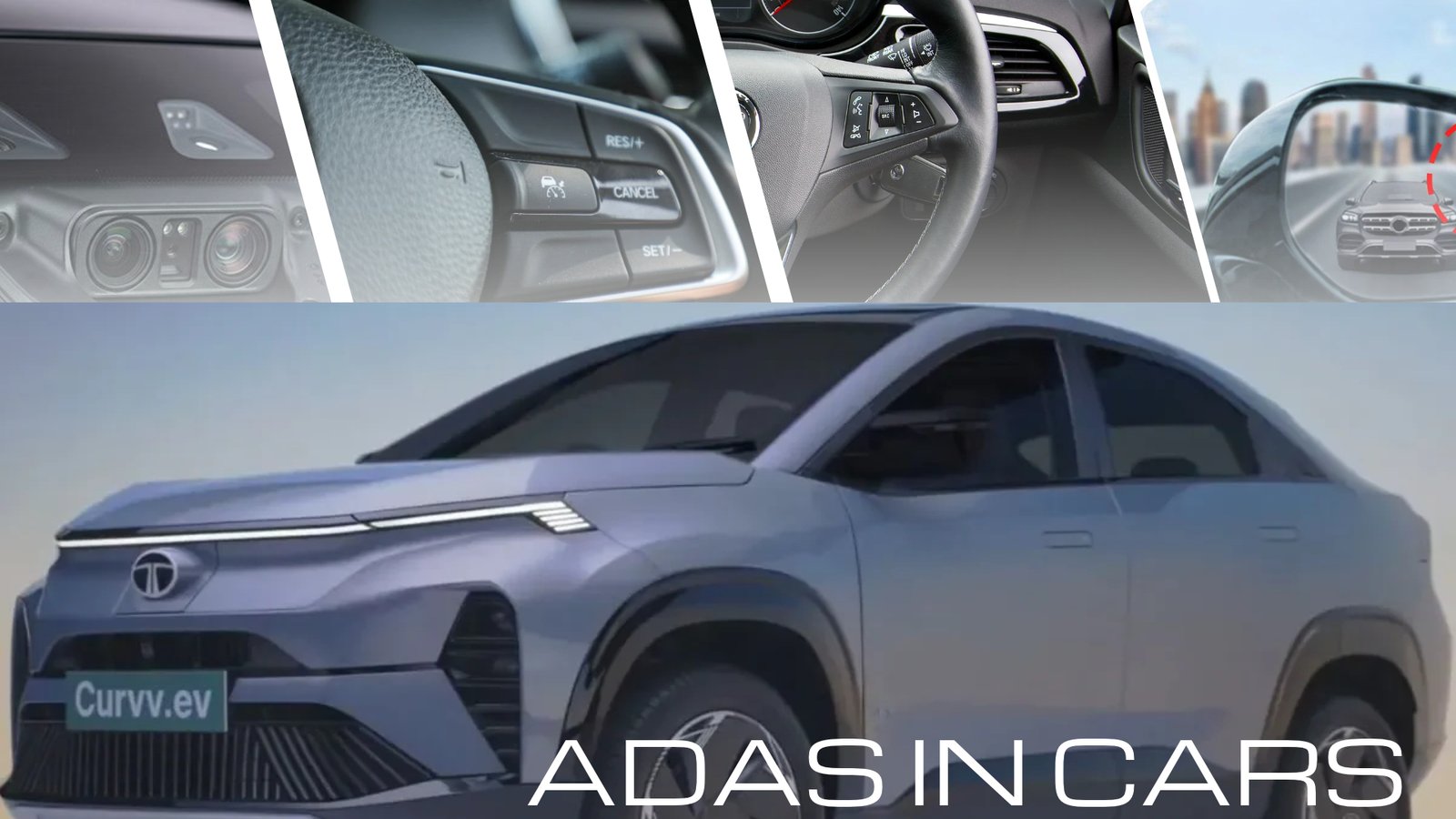
There are a large number of new aids and features available to help with safe driving, awareness of other road users and general driving in day-to-day situations. So engine power, economy, styling, interior space and other similar criteria may be secondary considerations for some car buyers. A varying number of electronic aids are available to detect various dangers and to help the driver deal with many circumstances.
Advanced Driver Assistance Systems, or ADAS, are a group of such aids.
Using various combinations of cameras, radar and other sensing devices, and various electronic controls, many different aspects of the driver’s environment can be assessed. The driver may be alerted to risk of impact with other vehicles, other road users may be detected in the driver’s blind-spots, help with staying within the road markings is available, and brakes may even be applied automatically under some circumstances.
With a growing range of cars offering some or all of these aids, it is useful to know more about them if buying a car.
This article describes some of the main aspects of ADAS, benefits, some of the shortcomings and points to bear in mind when considering purchasing a car with these features.
Meaning of ADAS
A variety of different electronic systems to aid the driver in various ways fall under this description.
By means of various inputs, for example cameras or radar, many features of the driving environment and conditions can be determined. Many of these systems are purely advisory to the driver. Others will intervene to a limited extent to control speed, apply brakes or steer.
If, for example, the car is closing on a vehicle ahead at an excessive rate, the driver can be warned (Forward Collision Warning); alternatively, the brakes may be applied to avoid or mitigate a collision if the driver fails to take appropriate action (Automatic Emergency Braking).
It can be seen therefore that these systems are intended to give additional help to the driver and encourage a safer response to conditions, but they are not a substitute for due care.
How does ADAS work?
A range of data is gathered from the area around the vehicle, which is then analysed.
There will be various combinations of different devices and software, depending on the make and model of vehicle, and on the options fitted.
A number of different elements may be included:
1. Cameras
To detect various features on and about the road.
These could include some or all of:
- Lanes
- Other vehicles
- Pedestrians
- Road signs
- Various obstructions
- Level of traffic
These would typically be fitted to the front of the vehicle, for example for Lane Departure and some Collision Warning functions.
2. Radar
This measures the range to targets and their rate of approach or recession, using radio frequency energy.
Many Adaptive Cruise Control and some Collision Warning functions would make use of radar.
It will generally be effective in most visibility conditions, to a degree dependent on the type and other prevailing conditions.
3. Ultra-sonic sensors
These will generally only be able to detect objects at relatively short range.
Most commonly these are available as part of some type of parking system to detect obstructions around the vehicle when manoeuvring at slow speeds.
4. Control units
Various Electronic Control Units would receive inputs from one or more sources.
Associated software would assess the information to decide whether to provide an alert to the driver and or take other appropriate action within its capabilities.
So, on detecting an impending collision ahead, it may alert the driver and or apply emergency braking.
Important ADAS Features in Modern Cars
There are a wide variety of systems which may fall under the description ADAS. Any combination, or indeed all, of these may be fitted to any one vehicle.
1. Auto Emergency Braking (AEB)
This is a collision mitigation system, that is, it attempts to prevent or minimise the impact of some collisions with objects in front of the vehicle.
It will detect various objects, which may include other vehicles, in front of the vehicle.
Should it determine that a collision is likely and the driver has failed, or not sufficiently, reacted, it will brake the vehicle.
Many vehicles will also detect some types of pedestrians, although this will vary considerably.
It should be stressed that this is only a collision mitigation system, that is, there will be many circumstances in which it would not avoid a collision.
2. Forward Collision Warning (FCW)
This measures the gap to various objects in front of the vehicle, and their rate of approach.
It will give some form of warning (usually visual, audible or both) if it judges there to be a risk of collision.
As the name implies, this only warns the driver of a possible collision, whereas the AEB described above will actually brake the vehicle under some circumstances.
3. Lane Departure Warning (LDW)
This will determine the position of the vehicle with respect to any identified lane lines.
Should the vehicle drift towards or over the lane line, the driver may be warned.
This could be audible, a warning lamp or lamps on the instrument cluster, or vibration of the steering wheel, depending on the vehicle.
It will generally only issue a warning, without taking any action to return the vehicle to within the lane.
4. Lane Keep Assist (LKA)
If the vehicle drifts from the lane identified by the system, various measures may be taken to return it to the centre of that lane.
This may include some degree of steering correction.
As the names suggest, there is a similar function performed by LDW (see 3. above) and LKA, although the latter goes further and may act to keep the vehicle within the lane.
5. Adaptive Cruise Control (ACC)
This is an extension of conventional cruise control in that it will vary the speed of travel in response to other vehicles ahead.
Once a reference speed and distance gap have been chosen by the driver, it will accelerate and decelerate as appropriate to maintain this distance gap.
Many systems will also work at standing and slow moving traffic.
It should be emphasised that at all times the driver needs to be alert and prepared to intervene as necessary.
6. Blind Spot Monitoring (BSM)
Other vehicles may be present around the vehicle, often out of sight of the driver in the wing mirrors.
If vehicles are detected in the relevant area, warnings may be given, for example, by a warning light in the appropriate wing mirror, on the instrument cluster, or audibly.
This may be beneficial, particularly with several adjacent lanes of traffic.
The driver should, however, always satisfy themselves as to other vehicles around before moving across any lane.
7. Rear Cross Traffic Alert (RCTA)
If the vehicle is being reversed, this will alert the driver to approaching vehicles from the left or right.
This may include vehicles not obviously visible, for example, on a screen showing the area directly behind the vehicle.
A further extension, Rear Cross Traffic Braking, will apply the brakes under some conditions.
8. Driver Drowsiness Warning
Various methods may be used to attempt to determine whether the driver may be drowsy or otherwise distracted.
These may include assessment of various aspects of the driving style, or use of an internal facing camera.
Appropriate messages may then be issued to the driver, advising them to take a rest period.
There are obviously many causes of tiredness which such a system would be unable to detect. They should therefore not be relied upon to “allow” continued driving.
9. Traffic Sign Identification
Using cameras, various signs may be detected.
Speed restrictions, prohibitions, and others, as applicable, may then be displayed, typically on the instrument cluster or central display.
Many factors, such as general visibility, the size, positioning and state of the signs themselves and the quality of the camera, will affect the success of this.
10. High Beam Assist
With suitable detection of other vehicles and general light levels, this can operate high and low headlights as appropriate.
Again, various vehicles and conditions will be detected using camera and other sensors.
Obviously this can be very useful at night, avoiding dazzling other drivers.
Benefits provided by some ADAS
If well developed and appropriately applied, many benefits may be realized:
1. Warning and other aids to avoid some hazardous situations
For example, Forward Collision Warning and Automatic Emergency Braking.
2. Increased awareness of other road users
For example, Blind Spot Detection and Rear Cross Traffic Alert to detect vehicles in areas with poor visibility.
3. Aid to some functions when driving on a suitable stretch of highway
For example, Adaptive Cruise Control and various lane keeping functions.
4. Aid when manoeuvring to park
A variety of proximity detectors, rear view camera, vehicles passing rearward.
5. Avoid some impacts, or mitigate their consequences
Various systems will attempt to avoid or mitigate the effect of a range of impact scenarios.
All of these will be limited to a degree by their capabilities and by weather and other conditions prevailing, and of course the driver’s actions.
Traditional car safety equipment and ADAS
There are many different aspects covered by both traditional safety features and various forms of ADAS.
| Traditional safety features | ADAS technologies |
| Seat belts | Forward Collision Warning |
| Airbags | Automatic Emergency Braking |
| Anti-lock Braking System | Lane Keeping Assist |
| Electronic Stability Control | Blind Spot Monitoring |
| Rear-view mirrors | Rear Cross Traffic Alert |
| Child safety locks | Adaptive Cruise Control |
All these traditional features are desirable to have in a car and it would be misguided to regard any form of ADAS as a substitute.
Things to be aware of if considering a car with ADAS:
1. Applicable variant or variants
It is worth checking which variant or variants will be provided with which features.
2. Types of ADAS available
This could include any combination of AEB, FCW, Lane Departure Warning, Lane Keep Assist, Blind Spot Detection and Adaptive Cruise Control. It would be wrong to generalise about the provision of different systems on all cars described as having ‘ADAS’.
3. Study the manual
This will give useful information on the various functions, speeds at which they will operate, various warnings, and so on.
4. Sensor and camera position
Useful to know the position of various sensors and cameras and any recommendations regarding their care.
5. Recalibration
It would be sensible to ask the relevant main dealer if recalibration would be necessary following, for example, renewal of the windscreen or repair to one of the bumpers.
6. Request a demonstration
Ideally from the dealer and under suitable conditions. There would of course be no justification for inducing AEB or other functions under potentially hazardous driving conditions!
7. Other safety features
Airbag protection, brakes, ESC, published results of impact tests, visibility from the driving position, and so on, are all also relevant.
Should you want to benefit from various ADAS functions?
Many motor vehicle purchasers will wish to take advantage of some or all of these types of aids.
All of them may be beneficial under appropriate circumstances.
This will of course vary significantly with the make and model of vehicle and standard of provision, as well as requirements of the individual and normal driving conditions.
Clearly there are many other aspects of the vehicle which a purchaser would wish to evaluate before basing a decision to buy purely on the range of ADAS functions offered, including general levels of safety provision, handling characteristics, reliability and running costs, and impact performance.
Conclusion
There is now a wide range of functions available to assist drivers, all falling under the general heading of ADAS. Automatic Emergency Braking, Forward Collision Warning, Adaptive Cruise Control, Blind Spot Monitoring and Lane Keeping Assist are just some examples of situations where the driver may benefit.
None of these systems will act as a substitute for a careful and attentive driver, all will have various limitations, and all to a greater or lesser degree will be affected by factors such as type of vehicle and fitment of equipment, quality and type of road markings and prevailing weather.
It would therefore be sensible for any prospective purchaser to familiarise themselves with the functions offered, consult the vehicle handbook and consider general safety features provided.
This should allow a greater appreciation of the many aids now offered as standard or optional on most vehicles, and so enable a more informed purchasing decision.
Frequently Asked Questions
A broad term covering a number of electronic aids to safe driving, giving warnings to the driver, continuously or situationally monitoring conditions around the vehicle, and in some cases taking some action.
Typical examples: Automatic Emergency Braking, Forward Collision Warning, Lane Departure Warning, Lane Keeping Assist, Adaptive Cruise Control, Blind Spot Monitoring.
Not with currently available production cars. All require a high degree of awareness and driver input.
As the name suggests, FCW will warn of an impending impact. AEB will actually brake the vehicle under some circumstances.
Many functions would to some degree be affected by heavy rain, fog, mud splashes, and so on. This will vary according to equipment fitted and other considerations.
Also, Read –