Wheel balancing is often discussed in the context of passenger cars, but for trucks and commercial vehicles, it plays an even more critical role. Larger wheels, heavier loads, and longer operating hours place significantly higher stress on suspension components, steering systems, and tires. When imbalance occurs, the consequences go far beyond uncomfortable vibration.
For trucks, poor wheel balance can lead to accelerated tire wear, reduced fuel efficiency, increased driver fatigue, and long-term damage to steering and drivetrain components. This is why professional-grade wheel balancing equipment is essential for workshops that service commercial fleets.
The Challenge of Balancing Truck Wheels
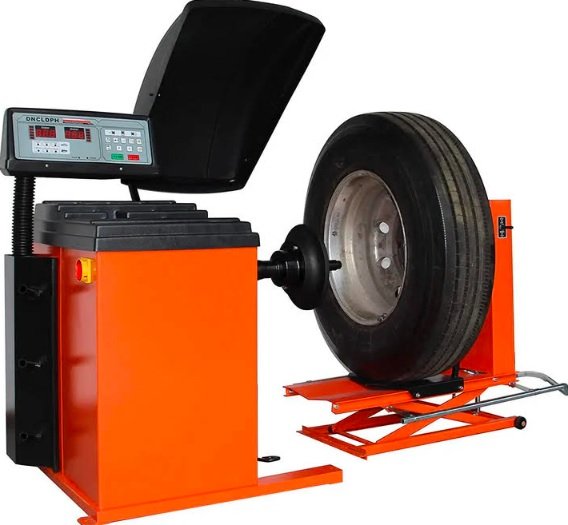
Truck wheels are heavier, wider, and more difficult to handle than standard car wheels. Manual lifting not only increases the risk of injury but also makes precise positioning on a balancing machine more difficult. Even small misalignments during setup can affect balance accuracy.
Traditional wheel balancers designed for passenger vehicles often lack the structural strength and lifting assistance required to safely and accurately handle truck wheels. This gap has driven the development of dedicated truck wheel balancers with air-powered wheel lift systems.
How Air-Powered Wheel Lifts Improve Accuracy and Safety
One of the most important features of modern truck wheel balancers is the integrated air-powered wheel lift. This system allows operators to raise and position heavy wheels without physical strain.
Key benefits include:
- Reduced injury risk for technicians
- More precise wheel alignment during mounting
- Improved workflow efficiency
- Consistent balancing results across different wheel sizes
By eliminating manual lifting, the air lift ensures the wheel is correctly centered on the spindle, which is critical for accurate imbalance detection.
Precision Matters More at Larger Scales
As wheel size and weight increase, so does the impact of imbalance. What might feel like a minor vibration in a passenger vehicle can cause serious handling issues in a loaded truck at highway speeds.
Professional truck wheel balancers are engineered to detect imbalance with high sensitivity, even on large-diameter wheels. This allows technicians to correct issues early, preventing uneven tread wear and extending tire lifespan.
For fleet operators, this precision translates directly into cost savings through reduced tire replacement frequency and lower maintenance expenses.
Supporting Fleet Maintenance and High-Volume Workshops
Workshops servicing commercial fleets require equipment that can operate reliably throughout the day. A dedicated truck wheel balancer supports:
- Faster service turnaround
- Consistent balancing quality
- Reduced technician fatigue
- Improved shop safety standards
In high-volume environments, these factors contribute to smoother operations and higher customer satisfaction.
Why Specialized Equipment Is a Long-Term Investment
While dedicated truck wheel balancers represent a higher upfront investment than standard machines, they quickly pay for themselves in reduced labour costs, fewer rebalancing issues, and improved service capacity.
As commercial vehicles continue to grow heavier and more complex, workshops equipped with proper balancing technology will be better positioned to meet future demands.
Conclusion
Wheel balancing is a foundational aspect of truck maintenance that directly affects safety, efficiency, and operating costs. With heavier wheels and tighter performance requirements, using the right equipment is no longer optional.
A truck wheel balancer with an air-powered wheel liftprovides the precision, safety, and efficiency required for modern commercial vehicle service — helping workshops deliver reliable results while protecting technicians and vehicles alike.