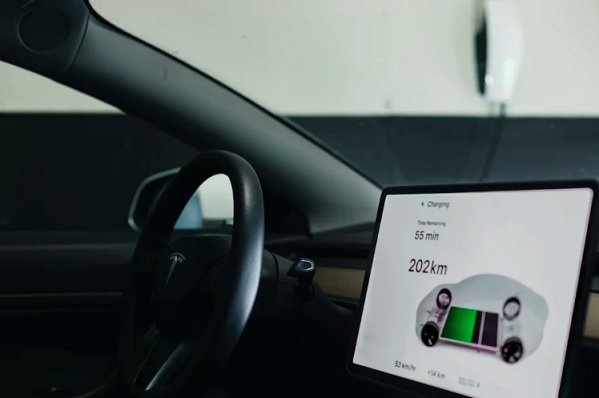
The selection criteria on a vehicle have greatly changed with time. Previously, engine displacement, ride comfort, fuel efficiency and brand reputation would be the main considerations by the buyers. By 2026, more emphasis is given to software-related features, such as over the air updates, driver-assistance systems, battery efficiency, interface design and connectivity.
Contemporary vehicles are now being designed more of a software platform, as opposed to a purely mechanical machine. This has led to numerous innovations being occurring inside of a vehicle, instead of the outward appearance, and competitive edge is frequently dictated by the competence with which the manufacturers cope with software integration and software upgrades.
Software-Defined Vehicles Are Standardizing
Software-Defined Vehicles (SDVs) has come into the reality as an actual concept and not as a theory. Software updates have enabled automotive companies to incorporate new features and provided an opportunity to enhance the already existing features. This enables cars to be continually improved even after being sold with a longer functionality and lifetime.
Meanwhile, such changes make the consideration of cybersecurity, system reliability, and effective update management more significant. The quality of the automobiles is no longer measured by the physical structure and the accuracy of the assembly but the output and the stability of the software programs.
System Performance has Become the Definition of Safety
There has also been a transformation of safety standards. Although contemporary cars are loaded with increasingly more driver-assistance systems, the influence of the latter is now evaluated not based on the quantity of installed systems but on its functionality. Timeliness, precision, and clarity of system interventions are critical factors in defining the effectiveness of system interventions. Driving systems that trigger too many warnings or systems that act unpredictably may decrease driver confidence. Consequently, usability and consistency in the real-life driving conditions are becoming the new definition of safety.
The Industry Is being Reshaped by Electrification
The industry is still being redefined by electrification in essence. It does not just apply to substituting the conventional engines but also applies to alterations in the architecture of vehicles, supply chains, battery technologies, charging systems, and thermal management. The history of modern vehicles needs to be viewed in a wider perspective that encompasses software, semiconductors and regulatory policies. Automobiles have turned out to be perceived as complex technological units as opposed to the secluded mechanical goods.
User Interface and Experience Are Important
user experience design and User Interface has become critical parts of developing vehicles. The drivers should have the capacity to interpret information fast and to take the necessary action and thus clarity and simplicity are essential. The idea is to show only the most pertinent information at the appropriate time, reducing the distraction and mental load. This is indicative of larger trends in digital product design where having a large number of features is a secondary consideration compared to the importance of usability and efficiency.
The 멜벳 앱 (Melbet) application is a mobile application that is aimed at sports betting and online casino games. It enables the users to bet in sporting events such as cricket and football, live viewings and real time statistics. The application is also used by mobile punters and is compatible with several payment options, as well as bonus-related services, like MelBet Korea, is also offers the same services, for the users.
Cybersecurity and Regulation Get Centerstage
With the increased integration of vehicles, cybersecurity and regulatory compliance have become significant. The security of the systems in the digital environment, safety of the software update, and preservation of data privacy have now become the basic needs. These factors have a direct impact on consumer trust and are regarded as the overall quality of the vehicles. Manufacturers are supposed to enjoy robust software installations all the way a car is in the market.
Cars Are Transforming into Constant Experiences
In the future, the cars will be made to seem simpler on the exterior and more intricate on the interior. Computing and automation, as well as connectivity, will still only improve functionality, without introducing obvious complexity. Meanwhile, cars are now being perceived as constantly developing products as opposed to inanimate ones. Infotainment, driver assistance, and energy management are features that can be updated on a regular basis, and thus they should be maintained between the users and the manufacturers.
Comprehensively, the automotive sector is moving away, as a hardware-oriented industry, toward software-oriented ecosystem. The performance of vehicles ceases to be determined by mechanical engineering only but by the combination of software, electronics and user experience. This change is transforming the manner in which vehicles are designed, tested and used in daily experience.
Refresh Date: March 17, 2026