Run flat tires offer genuine safety and convenience advantages—you can drive up to 50-100 miles after a puncture without stopping—but they come with measurable trade-offs in cost, ride comfort, and tread life that every driver should understand before making the switch. While there are different types of run flat tires available (self-supporting, support ring, and self-sealing), they all share similar pros and cons. This isn’t marketing hype. These are real engineering compromises backed by industry data, consumer reports, and manufacturer specifications.
The Advantages: Why Drivers Choose Run Flats
Safety During Blowouts
NHTSA reports approximately 11,000 tire-related crashes occur annually in the US, with over 500 fatalities in 2022. Many involve sudden loss of control during blowouts.
Run flat tires maintain structural integrity at zero pressure. When conventional tires blow out at highway speed, violent lurching and pulling can occur. With run flats, reinforced sidewalls or support rings keep the tire attached to the rim—steering remains responsive, braking stays predictable, vehicle stability is maintained.
No Dangerous Roadside Tire Changes
Changing a tire on a highway shoulder accounts for significant injuries annually (AAA data). It’s dangerous in traffic, unsafe areas, bad weather, or at night.
Run flats eliminate this risk. Drive up to 50 miles (self-supporting) or 80-100+ miles (support ring systems like Giti’s GitiControl P10 RunFlat) to the nearest service center.
Reclaims Cargo Space and Weight
Eliminating the spare tire, jack, and lug wrench frees 60–80 liters of trunk space and saves 35–50 lbs. Continental’s data shows up to 80 liters gained—significant for compact cars, EVs, and sports cars where space is premium.
Peace of Mind
For solo drivers, night commuters, frequent travelers, or those with mobility limitations making tire changes difficult—the psychological comfort of knowing a flat won’t strand you is tangible value.
Better Tire Pressure Monitoring Habits
Run flats require functioning TPMS (federal mandate since 2007), encouraging proactive tire pressure checks and improving overall tire maintenance.
The Disadvantages: The Real Trade-Offs
1. Firmer Ride Quality
The most common complaint. Run flat sidewalls are 2–3 times stiffer to support weight at zero pressure. Less flex means more impact energy transmitted to the cabin.
Consumer Reports testing confirms run flat vehicles score lower on ride comfort, especially on rough pavement and potholes. Modern run flats from Giti (GitiSilent technology), Bridgestone DriveGuard Plus, and Michelin ZP have closed the gap—but the physics trade-off remains.
2. Significantly Higher Cost
Run flats cost 35–200% more than conventional tires.
Mid-range sedan pricing (2025):
• Conventional: $120–$180/tire ($480–$720 set of four)
• Self-supporting run flat: $180–$320/tire ($720–$1,280 set)
• Premium support ring (Giti): $250–$400+/tire ($1,000–$1,600+ set)
Over 120,000 miles with three tire replacements, that’s $1,500–$2,400 more in tire costs.
3. Usually Cannot Be Repaired
Most manufacturers recommend replacement after any puncture—even minor ones. Driving on deflated run flats causes invisible internal damage: heat damage, layer separation, micro-fractures.
Repair policies:
• Pirelli: Never repairable
• Continental/Bridgestone: Only if not driven deflated, tread-area puncture, professional inspection
• Michelin ZP: Similar strict conditions
Reality: Budget for replacement, not repair.
4. Shorter Tread Life
J.D. Power research shows run flats wear 6,000 miles sooner than conventional tires—roughly 44,000 miles vs. 50,000 miles (12% reduction). Stiffer construction, higher rolling resistance, and increased weight contribute to faster wear.
5. Limited Availability
Run flats represent 12% of the passenger tire market. Rural shops may not stock them. Variety is significantly smaller—fewer options for specific performance needs (extreme winter, maximum efficiency, ultra-quiet).
6. Cannot Mix with Conventional Tires
Critical safety rule: all four tires must match. The stiffness difference creates uneven handling during emergency maneuvers, hard braking, and slippery conditions—potentially causing loss of control.
7. TPMS Dependency
Run flats look normal when deflated—TPMS is your only warning. If sensors malfunction, you could drive on a compromised tire unknowingly. Adds maintenance consideration and potential failure point.
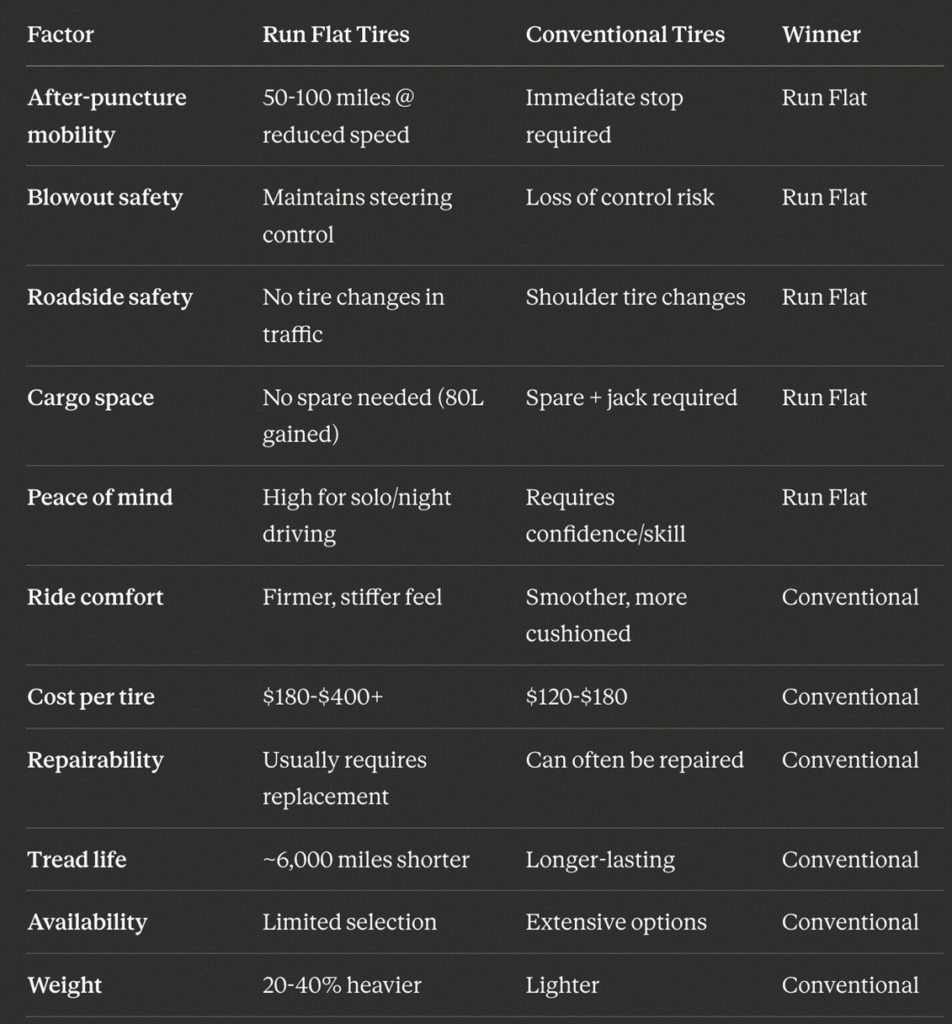
Side-by-Side Comparison Table
Frequently Asked Questions
Are run flat tires worth the extra cost?
It depends entirely on your driving patterns and priorities. For urban commuters within 50 miles of service centers, solo drivers, frequent night travelers, and BMW/luxury vehicle owners whose vehicles came factory-equipped—yes, the safety and convenience benefits justify the premium. For budget-conscious drivers, those in rural areas, or anyone who prioritizes ride comfort above all else—conventional tires with a spare or comprehensive roadside assistance may deliver better value.
Do run flat tires wear out faster than regular tires?
Yes. Industry research shows run flats typically last 6,000 miles less than comparable conventional tires—roughly 44,000 miles vs. 50,000 miles under normal conditions. The stiffer construction and higher rolling resistance contribute to faster tread wear.
Can you switch from run flat tires to regular tires?
Yes, but you must replace all four tires simultaneously and plan for a spare tire solution. Never mix run flat and conventional tires on the same vehicle. You’ll also need to ensure your vehicle’s TPMS is compatible and that the replacement tires match your vehicle’s load index and speed rating requirements.
Why do run flat tires cost so much more?
The premium reflects genuine engineering costs: specialized heat-resistant rubber compounds, additional reinforcement materials (thicker sidewalls, steel belts, Kevlar, or support rings), lower production volumes, and specialized mounting equipment requirements. These aren’t artificially inflated prices—the materials and manufacturing complexity genuinely cost more.
Do all run flat tires feel equally firm?
No. Significant variation exists between brands and technologies. Support ring systems (like Giti’s GitiControl P10 with GitiSilent technology) maintain better ride comfort than self-supporting designs. Within self-supporting run flats, newer models from Bridgestone DriveGuard Plus and Michelin ZP series have improved comfort compared to earlier generations. Test drive if possible before committing.
Key Takeaways: Run Flat Pros and Cons
ADVANTAGES:
• Genuine safety benefit during blowouts—maintains vehicle control when conventional tires would fail
• No dangerous roadside tire changes—drive up to 50-100 miles to safety
• Reclaims 60-80 liters of trunk space and 35-50 lbs of weight
• Peace of mind for solo drivers, night commuters, and frequent travelers
DISADVANTAGES:
• Firmer ride quality due to reinforced construction—less comfortable on rough roads
• 35-200% higher cost per tire—$800-$1,600+ for a full set vs. $480-$720 conventional
• Cannot usually be repaired—budget for replacement after any puncture
• 6,000 miles shorter tread life on average (12% reduction)
• Limited availability and selection, especially outside major metro areas
Making the Right Decision for Your Situation
The honest assessment: run flat tires aren’t universally “better” or “worse” than conventional tires. They’re optimized for different priorities.
Run flats make sense if:
• Safety and convenience outweigh cost and comfort considerations
• You drive a vehicle factory-equipped with run flats (BMW, Mini Cooper, Mercedes)
• You commute primarily within 50 miles of service centers
• You’re a solo driver or frequently travel at night in unfamiliar areas
• Trunk space is at a premium (compact cars, EVs, sports cars)
Conventional tires make sense if:
• Ride comfort is your top priority
• You’re budget-conscious and want lower total ownership cost
• You frequently drive in rural areas far from service centers
• You already have reliable roadside assistance coverage
• You want maximum tire selection and availability
Modern run flat technology—particularly premium systems like Giti Tire’s GitiControl P10 RunFlat with integrated GitiSilent noise reduction—has addressed many traditional complaints. The ride quality gap has narrowed significantly. But the fundamental trade-offs remain: you’re paying more upfront and accepting firmer ride characteristics in exchange for genuine post-puncture mobility and enhanced safety.
Ready to explore advanced run flat solutions? Discover Giti Tire’s support ring technology with proven performance across 675+ OEM vehicle models at giti.com/technology-in-motion.