The illusion of complete control is brought about by modern cars. And we are safe with advanced technology but the laws of physics remain the same in averting a multi-ton car. To know how to tell if you’re a dangerous driver, you have to see first what the science of stopping distances is.
Vehicle Mechanics vs. Human Latency, The Anatomy of a Stop
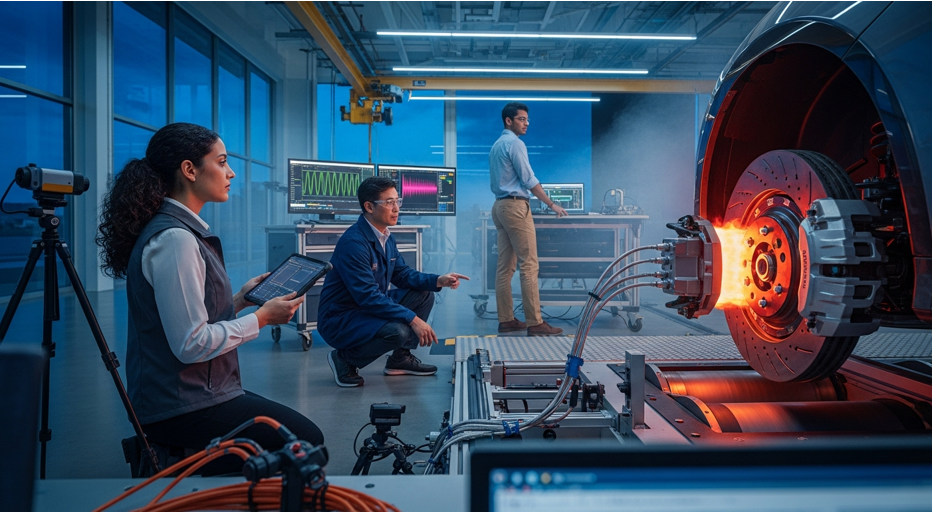
The total stopping distance is a straightforward formula having two complicated components. It is your reaction distance, the distance which you will cover during hazard processing by your brain and movement of your foot and mechanical braking distance. The automotive industry in 2026 is producing enormous breakthroughs in the mechanical stopping power. Pure electronic mechanical brake (EMB) systems are now beginning to be used in large quantities to replace the use of hydraulic fluid.
These EMB systems are software controlled and make response times to mechanical response take milliseconds. Nonetheless, all these mechanical advantages will be completely negated in case the reaction latency of the human driver is long. The National Highway Traffic Safety Administration (NHTSA) reports that a text message can either distract you, be it sending or receiving, and will take up to five seconds to respond to the text. It is a whole football field at 55mph, the same as driving that distraction in complete blindfold.
Factor Type2026 StandardAverage Latency / TimeImpact on Stopping DistanceMechanical (Electronic Brakes)Pure EMB SystemsMillisecondsHighly predictable and consistentHuman (Full Focus)1.5 to 2.5 SecondsBaseline safe distanceHuman (Texting and Distraction)Adds 300 feet at highway speed
The Signs: Brochure about How to Tell When you are a Dangerous driver
| Factor Type | 2026 Standard | Average Latency / Time | Impact on Stopping Distance |
| Mechanical (Electronic Brakes) | Pure EMB Systems | Milliseconds | Highly Predictable & Consistent |
| Human (Alert Driver) | Fully Focused | 1.5 to 2.5 Seconds | Baseline Safe Distance |
| Human (Distracted Driver) | Texting / Looking Away | 5.0+ Seconds | Adds 300+ feet at highway speeds |
The reason behind this is that when you are aware of the physics of a stop, you are able to judge yourself more truthfully regarding your own habits. Risk is spotted by the things that are directly affecting your reaction time and accelerating your vehicle and imparting the vehicle with additional kinetic energy. A complete alteration of the mathematical principles of safe stopping is what we call risky behavior.
Long-term: Speeding and Tailgating: The higher the speed, the higher the kinetic energy that needs a significant amount of braking time. NHTSA estimates that there were 11,775 speeding-related deaths on the roads in 2023. In addition, tailgating eliminates the significant spatial buffer which is imperative to aid the normal human reaction latency.
Digital Distractions: Texting is a form of cognitive blindness that cannot be overcome by even state of the art electronic brakes. According to the NHTSA, more than 3,000 individuals die in motor vehicle accidents, which are caused by distracted drivers each year.
Driving Fatigued: Drowsiness is synonymous with the slow reaction time that is caused because of alcohol impairment. The AAA Foundation of Traffic Safety states that 1/4 adult motorists (25%), so fatigued he or she could barely keep his or her eyes open in the past 30 days.
Aggressive Driving: Lack of emotional control is severe to be able to make a good spatial judgment. The road rage makes your blood flow increase to adrenaline but severely diminishes your capacity to analyze sudden risks in a safe manner. Statistics show that episodes of road rage that involve the use of guns have increased dramatically within the past ten years.
The Limits of 2026 Automotive Safety Technology
New technology cannot be used to make up the poor driving habits. Most of the commercial and passenger vehicles are now required to have Advanced Driver Assistance systems (ADAS) and Advanced Emergency Braking (AEB) according to the stipulations of governments across the globe. These active systems are automatic brakes when a collision is about to occur.
The technology is not fallible even with these mandates. Self-driving and automated braking regulatory policies are in the market awaiting a fast software update. In addition, the drivers are frequently annoyed by the miscalibrated or over-sensitive systems of the ADAS. Human beings are the last safety measure as witnessed by the fact that most motorists will switch off these significant safety nets in order to avoid the frequent alerts.
Learn Your Risk: Take Our Take Our Dangerous Driver Test
The first step to achieving road safety in the long run is to know that you are a bad habit yourself. Once you have acquired the awareness of the physics that is limiting your car, there is no longer time to wait and change things personally by looking at your daily habits. In case you are asking yourself about your level of risk, we have provided an effective evaluation tool to help you to determine that.
In order to gain your own personalized vision of your driving habits and be aware of how to get to know whether you are a dangerous driver or not, take our interactive test. This is a quick, two-minute quiz that will test your habits and will demonstrate whether your reactionary times and everyday choices put you in the low-risk lane or the high-risk territory.
Learning how to master the Road Ahead
Braking technology cannot engineer out bad habits of bad drivers who are habitual. The electronic braking systems and the collision avoidance sensors are wonderful devices but they require a delicate hand of a responsible human being to perform best. The safety of your commute is determined by your concentration.
When you control your speed, store electronic gadgets and maintain attention, you are saving yourself and all other people using the highway. Only minor changes in your day to day driving will make a huge difference towards preventing car accidents. You have the ability to control your reaction times and it is the most effective way to make sure that you get to the destination safely.
Refresh Date: April 2, 2026