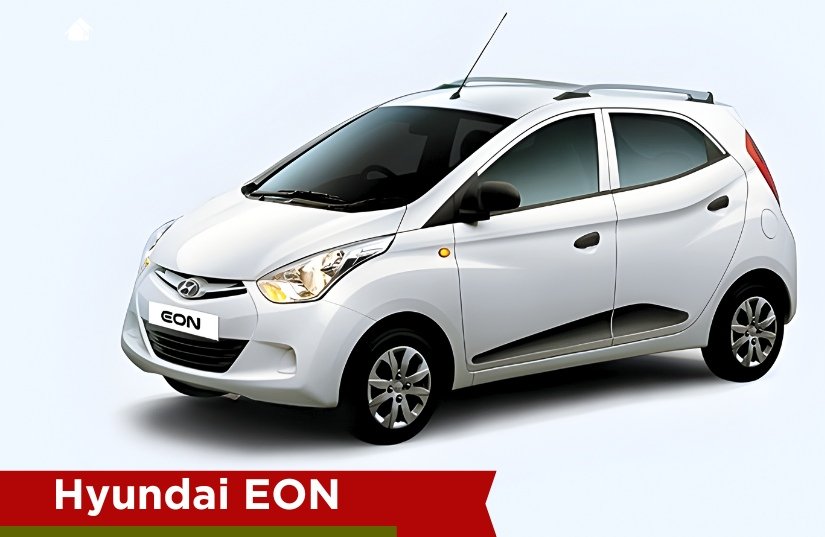
When the Hyundai EON Car introduced in India, it totally changed the way an entry-level hatchback should be. So far, small-town cars were not pretentious but rather plain and functional. The EON came with an energetic design philosophy, modeled body lines, a flowing exterior, and a luxurious interior, which was worthy of the segment higher than it was. Its release made a significant change to the market of small cars, forcing the rivals to reconsider their strategy.
Although the EON car is no longer produced and Discontinued in India (the Hyundai EON was stopped in 2019), the car has still been popular in the pre-owned Automobile market in India. It is still being considered by buyers due to its high-end styling, high quality of build, finely tuned engines, and high level of fuel efficiency.
This article will discuss information about the EON car Review in detail.
Hyundai Eon: Overview
The Hyundai Eon is a small city car designed by the South Korean car manufacturer Hyundai. Its first debut was in India on 13 October 2011, after which it was launched in the Philippines in March 2012, Vietnam in June 2012, and Sri Lanka in June 2014.
Additionally, the model has been available in multiple international markets such as Honduras, Nepal, El Salvador, Nicaragua, Chile, Peru, Panama, and Colombia. Transformed into the Hyundai Atos Eon, it was branded in many areas. The Eon has discontinued its production in India and other worldwide markets as of 2019.
| Attribute | Details |
| Company | Hyundai Motor India Limited |
| Parent Brand | Hyundai Motor Company (South Korea) |
| EON Launch Year | 2011 |
| Discontinuation Year | 2019 |
| Segment | Entry-Level Hatchback |
| Key Focus | Affordable urban mobility |
| Competitors at Launch | Maruti Alto, Tata Nano |
| Manufacturing Plant | Chennai, Tamil Nadu |
EON Car Price (Last Recorded) and Variants
EON Car Petrol Variants Price, Mileage and Engine
The Hyundai EON Car used to be priced at 3.33 lakh to 4.68 lakh ex-showroom before it was discontinued. These were prices that differed according to type of engine, features and level of variant.
| Variants | Engine | Mileage | Price |
| EON Era (Base) | 814 cc | 21.1 kmpl | ₹3.33 Lakh |
| EON D Lite | 814 cc | 21.1 kmpl | ₹3.35 Lakh |
| EON New | 814 cc | 22 kmpl | ₹3.37 Lakh |
| EON D Lite Optional | 814 cc | 21.1 kmpl | ₹3.40 Lakh |
| EON D Lite Plus Option | 814 cc | 21.1 kmpl | ₹3.64 Lakh |
| EON D Lite Plus | 814 cc | 21.1 kmpl | ₹3.72 Lakh |
| EON Magna Optional | 814 cc | 21.1 kmpl | ₹3.83 Lakh |
| EON Era Plus | 814 cc | 21.1 kmpl | ₹3.86 Lakh |
| EON Era Plus Option | 814 cc | 21.1 kmpl | ₹3.95 Lakh |
| EON Magna | 814 cc | 22 kmpl | ₹3.97 Lakh |
| EON Era Plus Sports Edition | 814 cc | 21.1 kmpl | ₹4.02 Lakh |
| EON 1.0 Kappa Magna Plus | 998 cc | 20.3 kmpl | ₹4.15 Lakh |
| EON Magna Plus | 814 cc | 21.1 kmpl | ₹4.17 Lakh |
| EON Magna Plus Sports Edition | 814 cc | 21.1 kmpl | ₹4.27 Lakh |
| EON Magna Plus Option | 814 cc | 21.1 kmpl | ₹4.27 Lakh |
| EON 1.0 Era Plus | 998 cc | 20.3 kmpl | ₹4.35 Lakh |
| EON 1.0 Kappa Magna Plus Optional | 998 cc | 20.3 kmpl | ₹4.43 Lakh |
| EON Sportz (Top Petrol) | 814 cc | 21.1 kmpl | ₹4.45 Lakh |
| EON 1.0 Magna Plus Option O (Top Model) | 998 cc | 20.3 kmpl | — |
EON Car LPG Variants Price, Mileage and Engine
| Variants | Engine | Mileage | Price |
| EON D Lite Plus LPG (Base LPG) | 814 cc | 21.1 km/kg | ₹3.45 Lakh |
| EON LPG D Lite Plus | 814 cc | 21.1 km/kg | ₹3.51 Lakh |
| EON LPG Era Plus | 814 cc | 21.1 km/kg | ₹3.92 Lakh |
| EON LPG Era Plus Option | 814 cc | 21.1 km/kg | ₹4.06 Lakh |
| EON LPG Magna Plus (Top LPG) | 814 cc | 21.1 km/kg | ₹4.23 Lakh |
These prices are no longer applicable for new units, but they reflect the range at the end of production.
Used Hyundai EON Market Price (Current Scenario)
In the used car market, the Hyundai EON car has not yet been supplanted, as there are still plenty of the cars basically due to their cheap ownership price, high mileage and great engine durability. The used EON remains one of the best value-for-money hatchbacks for budget-conscious buyers.
| Model Year | Typical Used Price |
| 2019 | ₹2.6 – ₹4.4 Lakh |
| 2018 | ₹2.2 – ₹3.1 Lakh |
| 2017 | ₹1.7 – ₹2.8 Lakh |
| 2016 | ₹1.6 – ₹2.0 Lakh |
| 2015 | ₹1.5 – ₹2.2 Lakh |
Hyundai EON Exterior Design & Styling
- Hyundai EON is considered to be one of the most fashionable low-cost cars in the history of sales in India.
- It brought on board the famous Hyundai Fluidic Sculpture design philosophy into the least segment, which made it appear more modern and bold over its competitors.
- The front fascia has swept back headlamps, a sculptured bonnet, broad hexagonal grill and a sporty bumper which makes the car have high profile.
- The fog lamps contribute to the high end experience. To the side, the EON has flowing lines of character, high wheel arch and a rising shoulder line that adds to the sporty appearance.
- The back includes a wrap-around taillamps, built-in spoiler and a trendy rear-bumper.
- All these factors combine to give the EON a modern and young appearance even nowadays, many years after its abandonment.
| Exterior Dimension | Measurement |
| Length | 3495 mm |
| Width | 1550 mm |
| Height | 1500 mm |
| Wheelbase | 2380 mm |
| Ground Clearance | 170 mm |
| Tyre Size | 12–13 inches |
| Kerb Weight | 840–860 kg |
Hyundai EON Interior & Cabin Comfort
- The Hyundai EON had a good interior as one of its most competitive advantages.
- Hyundai also applied dual-tone beige and black dashboard with soft curves in Hyundai EON that was unheard of in the same segment.
- The centre console is V-shaped, and this section has the AC controls and optional audio system.
- There is a big speedometer and digital MID display of trip meter, odometer and shift indicator in the instrument cluster.
- Storage of cabin is also properly designed with a spacious glovebox, bottle holders, cup holders and dashboard storage.
- The seats are comfortable and well cushioned and great under-thigh support both at the front and the rear.
- The 215-litre boot area is one of its greatest strengths, and it beats all cars of its segment and even higher ones.
| Interior Feature | Description |
| Dashboard Theme | Dual-tone black & beige |
| Seating Capacity | 5 |
| Boot Space | 215 litres |
| Instrument Cluster | Analog + MID |
| AC & Controls | Manual AC |
| Front Seat Support | Excellent under-thigh comfort |
Engine Options & Performance
Hyundai provided two engine options for the EON: a frugal 0.8L iRDE and a peppier 1.0L Kappa engine.
| Engine | 0.8L iRDE | 1.0L Kappa |
| Displacement | 814 cc | 998 cc |
| Power | 55.2 bhp | 68 bhp |
| Torque | 76 Nm | 94 Nm |
| Fuel Type | Petrol / LPG | Petrol |
| Transmission | 5-speed manual | 5-speed manual |
| Mileage (ARAI) | 21.1 kmpl | 20.3 kmpl |
Hyundai EON Ride Quality & Handling
Its McPherson strut suspension in the front and torsion beam in the back have made the Hyundai EON car provide a comfortable ride on the well-paved roads. The ride is smooth at low speeds and stable on highways when driven at moderate speeds. City driving is hassle-free due to the small size, which enables easy parking and turning. It is light in steering, and this is an advantage in town work, but there is less feedback at higher speeds. Early understeer during quick cornering is caused by skinny tires, and the upgrading of tires is usually advised to enhance better grip and stability. Braking is satisfactory and the brake feel is progressive.
EON Car Safety Features
The Hyundai EON has safety measures such as reinforced body structure, front and rear seat belts, child safety lock and an engine immobilizer. The Sportz version also has a driver airbag and fog lamps. Even though ABS was not provided, the lightweight construction and braking performance of the car make it quite safe in its area of application.
| Safety Feature | Availability |
| Driver Airbag | Yes (Sportz) |
| Passenger Airbag | No |
| ABS | No |
| Rear Child Lock | Yes |
| Engine Immobilizer | Yes |
| Fog Lamps | Yes (Sportz) |
Hyundai EON Variants Key Highlights
Hyundai provided the EON car in 0.8L engine with 6 variants and the 1.0L Kappa engine with 1 variant.
| Variant | Key Highlights |
| D-Lite | Basic features, immobilizer, seat belts |
| D-Lite+ | Adds AC and power steering |
| Era+ | Power windows, tinted glass, LPG option |
| Magna+ | Central locking, adjustable mirrors, audio system |
| Sportz | Keyless entry, fog lamps, airbag |
| Magna+ (O) 1.0L | 1.0L engine, premium features |
Why Was the Hyundai EON Car Discontinued?
Hyundai discontinued the production of the Eon in India after the car could no longer comply with stricter safety and emission standards in the country.
Besides that, the Eon’s sales were cannibalized by the Hyundai Santro, which was a more contemporary and profitable model. So, instead of investing a lot in modernizing the old Eon platform, Hyundai took the decision to concentrate on the newer models and at the same time, allow the factory to be used for other purposes.
Major Factors of the Eon Being Discontinued
1. Failure to Meet New Safety Rules
Since April 2019, exhaust ABS, an airbag for the driver, parking sensors at the rear, speed warning, and seatbelt reminders have become mandatory for all new cars by the government’s decree. The Eon was lacking in these features, and Hyundai did not choose to re-engineer it because the update cost would be too high for a bottom-level car.
2. BS6 Emission Norm Challenge
The upcoming BS6 emission norms (April 2020) were more stringent and required costly improvements for small engines of the Eon. For a low-cost car, such a business move was not financially viable.
3. Competition from the New Santro
The relaunch of the Santro had a direct (Eon) segment overlap. Buyers decided to go for the better-equipped Santro, and Hyundai, therefore, made more money from it. This internal competition led to the decline of the Eon.
4. Eon Discontinuation to Reclaim Manufacturing Space
By doing away with the Eon, Hyundai released more production space at its Chennai plant for newer and more profitable models, such as SUVs and premium hatchbacks.
5. Eon was on an Outdated Platform
The Eon, which was launched in 2011, was already at a point where a major overhaul was needed. In lieu of upgrading it, Hyundai opted to replace it with the contemporary Santro that complies with all the safety and emission regulations.
Hyundai EON Competitors Comparison
When launched, the Hyundai EON competed with the Maruti Alto, the Tata Nano, and later the Renault Kwid.
| Model | Engine | Power | Mileage | Boot Space |
| Hyundai EON | 814–998 cc | 55–68 bhp | 20–22 kmpl | 215 L |
| Maruti Alto | 796 cc | 47 bhp | 22 kmpl | 177 L |
| Tata Nano | 624 cc | 37 bhp | 21.9 kmpl | 80 L |
| Renault Kwid | 800–1000 cc | 54–68 bhp | 22–25 kmpl | 300 L |
Conclusion
Hyundai EON is a car that has had a significant effect on the Indian market as an entry-level hatchback. Although it was discontinued in 2019, its legacy remains in the second-hand car market where consumers still appreciate the fact that they have been designed with a high level of sophistication, elegant engines, trustworthy performance, and outstanding fuel consumption. The EON helped Hyundai to bring a new dimension of style and quality in the low-end market segment that provided them with features, interior finish and the overall driving experience that was way above the competition.
FAQs
Yes, the EON is very user-friendly to drive, has light controls, good mileage and low dimensions, and is a perfect fit amongst the first-time car purchasers.
Hyundai EON achieves a mileage of 20 -22kmpl depending on the engine version and driving conditions.
In 2019, Hyundai withdrew the EON due to its failure to comply with the new safety and emission standards and replaced it by the Santro as the entry-level model.
Yes, it is very good value on the used-car market in that it has low cost of maintenance, good engine, build and low cost.
The engine with 0.8L is more economical and suitable to be used in city driving, whereas the 1.0L engine has better performance and smooth acceleration.