Key Highlights
Here’s a quick look at what we’ll cover in this guide:
- Screw-in tent pegs offer superior holding capacity compared to traditional tent pegs, especially in tricky ground conditions.
- The primary difference lies in their threaded design, which grips the ground for a secure hold.
- Your ease of use is significantly improved, as a drill replaces the need for a hammer.
- Different types of screw pegs are designed for specific terrains, from soft sand to hard, rocky soil.
- Weighing the pros and cons helps you decide if they are the right investment for your next adventure.
Introduction
Every camper knows the frustration of a collapsed tent or flapping awning. Often, the key is the tent peg—an overlooked but essential piece of gear. If you’re tired of bent stakes, consider upgrading to screw pegs. Durable steel screw pegs are revolutionizing camping by keeping shelters secure in any weather.
Understanding Screw-In Tent Pegs
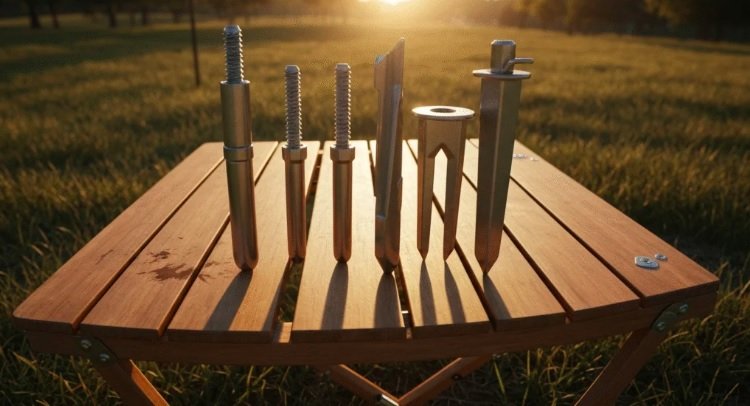
So, what are screw-in tent pegs? Think of them as heavy-duty screws for anchoring tents. Unlike traditional smooth pegs you hammer in, screw-in tent pegs have wide threads that drill into the ground, offering a much stronger grip. Made of steel, these screw-in tent pegs lock firmly into place, making your tent more stable and harder to dislodge. This simple design upgrade greatly improves stability and peace of mind. Next, we’ll look at what sets them apart and the main types available.
What Sets Screw-In Tent Pegs Apart from Traditional Pegs
The key difference from traditional tent pegs is the threaded shaft. While standard pegs use friction from smooth sides, screw-in pegs grip the ground with threads, offering a stronger hold against wind and tension.
Screw-in pegs are also easier to use—you drive them in with a drill instead of hammering, making setup faster and reducing the risk of bent pegs on hard ground.
In short, traditional pegs are simple and lightweight, but screw-in pegs provide superior security and convenience, especially in tough conditions.
Common Types and Materials of Screw-In Tent Pegs
Screw-in tent pegs come in different materials, each suited for specific conditions. Steel pegs—usually stainless steel or tough iron—are best for hard, rocky ground and won’t bend or break easily.
For soft ground like sand or snow, use reinforced nylon or durable plastic pegs. These are lightweight and have wider threads to grip loose terrain while keeping pack weight down. High-quality, rust-resistant materials are key for reliability.
Choose your peg based on where you’re camping:
| Peg Type | Best For | Material Example |
| Hard Terra Pegs | Grass, dirt/gravel, rocky soil | Heavy-duty steel |
| Soft Terra Pegs | Sand, soft grass, snow | Reinforced nylon/plastic |
| Light Terra Pegs | Light setups on grass or dirt | Lightweight steel |
Pros and Cons of Screw-In Tent Pegs
Deciding on screw-in tent pegs means considering their pros and cons. They offer superior holding power and work well in various ground types, providing more security than traditional pegs.
However, they cost more upfront and require an extra tool, like a cordless drill. Weighing these factors will help you decide if they suit your camping needs.
Key Advantages for Australian Campers
Screw-in pegs offer unbeatable grip for campers facing tough ground conditions. Their long steel versions excel in rocky or hard soil, ensuring your setup stays secure in strong winds and rough weather.
While pricier, their reliability and ease of use make them a smart investment for frequent campers. Setup and takedown are quick with a drill—no more bent pegs or struggling with a hammer—so you can spend more time enjoying your trip.
Key benefits:
- Superior Holding Power: The threaded design anchors firmly in almost any terrain, even loose sand.
- Effortless Setup: A cordless drill makes installation and removal fast and easy.
- Versatility: Options tailored to different ground types ensure you always have the right peg.
Potential Drawbacks to Consider
While there are many benefits, a few drawbacks exist. The main one is the need for a power tool—a drill—which can be inconvenient if you prefer to travel light or avoid battery concerns. Manual options like spanners are available but less efficient.
Heavy-duty steel units are strong but heavier than aluminum pegs, making them less suitable for ultralight backpackers. They also cost more upfront than standard pegs, which may deter casual campers. Be cautious of exaggerated claims and choose proven materials.
Potential drawbacks:
- Higher Cost: More expensive than traditional pegs.
- Tool Requirement: Often requires a cordless drill and proper socket.
- Weight: Steel pegs can be heavy—an issue for backpackers.
- Not Always Necessary: For mild conditions, traditional pegs suffice and save effort.
Performance in Different Ground Conditions
The real test of any tent peg is its performance in tough ground conditions. Screw-in pegs offer a major advantage—they’re engineered for nearly every terrain. For best results, always match your peg to the ground.
Whether you’re on soft soil, a windy beach, or rocky terrain, there’s a screw-in peg designed to hold firm. Here’s how they perform in two common challenges: sand and hard-packed earth.
How Screw-In Tent Pegs Work in Sand and Loose Soil
Traditional pegs often fail in soft sand or loose soil because they lack grip and pull out easily. Screw-in sand pegs solve this with wide, deep threads that act like an auger, pulling the peg down and compacting sand for a secure anchor.
Why screw-in sand pegs excel in loose terrain:
- Large threads create superior grip.
- They bore into ground instead of merely displacing it.
- Offer reliable hold where standard pegs fail.
- Engineered for beaches and soft soil.
Effectiveness on Rocky or Hard Ground
Hard, rocky ground often bends or breaks traditional pegs, making setup difficult. Heavy-duty screw-in steel pegs solve this problem.
With a cordless drill, these steel pegs easily penetrate compacted or stony earth. The drill’s rotational force helps the peg navigate rocks and hard soil, securing a strong anchor without relying on brute force.
Their advantages on hard ground include:
- Penetrating Power: The drill’s torque drives the peg into tough surfaces.
- Durability: High-strength steel resists bending and breaking during installation.
Beginner’s Guide: How to Use Screw-In Tent Pegs
Using screw-in tent pegs is easy—if you can handle a drill, you’ll master them in minutes. Their simplicity turns a tedious camping chore into a quick, satisfying task.
This method saves your back and ensures a secure anchor every time. No more hammering guesswork; screw-in pegs give you consistent, reliable hold. Here’s how to get started.
Essential Equipment and Tools You’ll Need
To use screw-in tent pegs efficiently, you need just a few tools. The most important is a cordless drill—an 18V model is usually sufficient for most ground types. You’ll also need a socket adapter and the correct size socket (typically 19mm) for the peg’s hex head.
If your drill isn’t available, you can use a hand brace or spanner, though this requires more effort. Some pegs work with a hex hook for manual turning.
Essential toolkit:
- Cordless drill
- Correct-size socket (e.g., 19mm)
- Socket adapter
- Manual backup (spanner or wrench)
Step-by-Step Guide to Installing and Removing Screw-In Tent Pegs

Using screw-in pegs is much easier than hammering. The process is quick, controlled, and requires little effort.
To Install:
- Attach the correct socket to your drill.
- Place the peg tip where you want it.
- Angle the peg slightly away from your tent or awning for best hold.
- Gently squeeze the trigger and let the drill drive the peg in until flush.
To Remove: Switch your drill to reverse, attach the socket, and back the peg out. No yanking required—protects both peg and ground.
Conclusion
In conclusion, screw-in tent pegs provide campers with greater stability and reliability in diverse ground conditions. Their strong anchoring offers peace of mind during windy or uneven terrain. While they may be heavier and require more effort to install, their benefits often outweigh these drawbacks—especially for frequent campers in tough environments. Upgrade your camping setup with quality screw-in pegs and keep your tent secure. Contact us to find the best options for your next adventure!
Frequently Asked Questions
Do screw-in tent pegs last longer than regular pegs?
Yes, high-quality screw-in steel pegs often last longer. Because they are drilled instead of hammered, they are less prone to bending or breaking on hard ground. Many are made from durable material types like stainless steel tent pegs, which resist rust and corrosion, with some even offering a lifetime guarantee.
Can screw-in tent pegs secure caravan awnings or large tents?
Absolutely. Their holding capacity is one of their biggest strengths. Heavy-duty steel pegs with large diameter flutes, sometimes known as ground grabba pegs, are specifically designed to secure large structures like caravan awnings and family-sized tents, holding a high maximum kilogram rating even in strong winds.
Are screw-in tent pegs suitable for ultralight backpacking?
It’s a trade-off. While the heavier steel pegs add significant weight, there is a range of sizes available. Some ultralight plastic sand pegs or shorter steel pegs could be added to your own stash for specific trips, but for the true ultralight backpacker, traditional lightweight aluminum stakes are often preferred.
Are there situations where traditional tent pegs are a better choice?
Yes. For ultralight backpacking where every ounce counts, traditional tent pegs are lighter. On very soft ground where a simple stake will hold securely, the extra hard work of getting a drill out may not be necessary. The best choice always depends on the specific ground type and your camping style.