Why Laser Cutting Has Become Essential in the Automotive Industry
The automotive industry is in the middle of a major transformation. Automakers are rapidly shifting toward lightweight materials, electric vehicle platforms, and high-precision production methods. Because of this, manufacturers must use technologies that provide repeatability, precision, speed, and cost efficiency. Laser cutting machines meet all of these requirements, and they have become one of the most valuable tools on modern production lines.
Today, laser cutting is used in almost every stage of vehicle manufacturing—from early prototyping to full-scale mass production. The technology’s ability to cut metals, plastics, and composite materials with exceptional accuracy has made it indispensable. For readers who want to understand how laser processing is shaping this field, you can explore it more deeply through Laser Cutting in Automotive Manufacturing, which offers an in-depth overview of typical automotive applications.
In this article, we will break down how laser cutting supports major automotive manufacturing stages, why automakers rely on it, and how it contributes to efficiency, safety, and design innovation.
Car Body Production: Achieving High Strength and Precision
Key Point: Laser cutting ensures accuracy and consistency for critical structural parts.
The car body is one of the most important components in vehicle manufacturing. It determines the overall strength, crash behavior, durability, and even noise and vibration performance of the vehicle. Modern body structures use a mix of aluminum alloys, high-strength steels (HSS), ultra-high-strength steels (UHSS), and lightweight composites. Producing these materials requires clean, distortion-free cutting.
Laser cutting provides several decisive advantages:
- Smooth, burr-free edges that reduce the need for secondary finishing
- Minimal heat-affected zones, maintaining the original material strength
- High repeatability, essential for mass-produced parts
- Complex geometry support, allowing manufacturers to design safer, lighter shapes
Typical body components made with laser cutting include:
- Door panels and reinforcement beams
- Crash-absorbing structures
- Roof frames and pillars (A, B, and C)
- Wheel housings and floor panels
- Chassis rails and mounting brackets
Automotive manufacturers rely heavily on computer-controlled laser cutters to meet strict safety and precision requirements. As crash tests become more demanding, the precision of structural components becomes increasingly critical.
Interior Manufacturing: Perfect Edges for Premium Quality
Key Point: Interior components require clean edges and complex shapes that only lasers can achieve efficiently.
Inside the car, manufacturers use materials such as ABS, PP, PC, composite plastics, fabrics, and thin metals. These materials often require delicate handling, as traditional mechanical cutting can easily cause cracks, burn marks, or uneven edges.
Laser cutting solves these issues by providing:
- Clean, smooth cuts that eliminate secondary polishing
- Precision that ensures perfect fitting of interior components
- Flexibility to accommodate curved, multi-layered, or thin materials
Common interior parts processed with lasers include:
- Dashboard openings and instrument panel cutouts
- Air-vent contours
- Decorative trim pieces
- Touch-panel interfaces and control-panel windows
- Speaker grill patterns and inner-door components
Because interior aesthetics significantly influence customer satisfaction, automakers must maintain perfect visual quality. Laser cutting ensures that edges, openings, and details meet luxury-level standards.
EV Components: Precision Cutting for Electric Vehicles
Key Point: The rise of EVs has increased the demand for highly precise laser processing.
Electric vehicles have pushed the industry toward more complex components and lightweight structures. EV battery modules, motors, and electrical housings require extremely precise tolerances, which make laser cutting the ideal technology.
Applications of laser cutting in EV manufacturing include:
- Battery tray and battery pack structural components
- Aluminum cooling plates and fluid channel designs
- Copper and aluminum foil cutting for battery cells
- Motor housings, shielding parts, and lightweight brackets
- Thin metal connectors and busbars
Laser cutting supports the production of EV parts with high dimensional accuracy and consistency—critical for ensuring performance, safety, and thermal efficiency. As EV platforms continue to evolve, laser cutting will play an even more significant role in shaping the next generation of electric vehicles.
Tube and Profile Cutting: Essential for Automotive Frames
Key Point: Tube laser cutting enhances strength, weight reduction, and structural accuracy.
Many automotive components rely on tubes and profiles, especially in:
- Seat structures
- Exhaust systems
- Suspension and steering parts
- Body frames and reinforcements
- Roll cages and protective structures
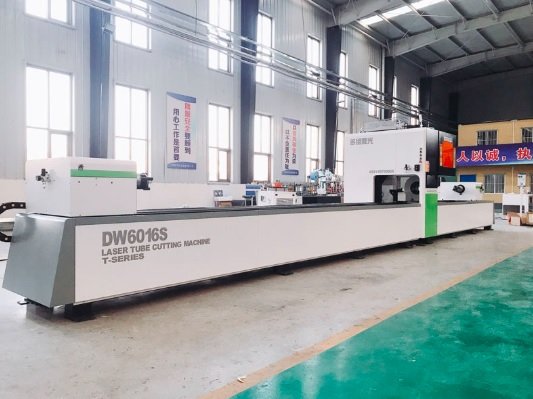
Tube laser cutting machines provide key benefits:
- Precise hole placement and bevel cutting
- Perfect joint fit-ups for welding
- Fast and automated processing
- Repeatable geometry for structural consistency
Because automakers aim to reduce vehicle weight without sacrificing strength, tube laser cutting makes it easier to produce lightweight, highly engineered parts with accuracy and reliability.
Prototyping and R&D: Accelerating Vehicle Development
Key Point: Laser cutting dramatically shortens development cycles and reduces tooling costs.
In automotive R&D, speed matters. Designers and engineers often need to modify parts multiple times before finalizing a model. Traditional stamping methods require steel molds, which are expensive and time-consuming to produce. Laser cutting eliminates this bottleneck.
Benefits in prototyping include:
- Rapid iteration—designs can be cut immediately from CAD files
- No tooling cost or mold machining
- Ability to produce small batches easily
- Better flexibility for unconventional shapes and experimental materials
This allows automotive companies to shorten time-to-market and reduce development budgets.
Automation: Robotics + Laser Cutting for Peak Efficiency
Key Point: Laser machines integrate perfectly with robotic systems for continuous production.
Modern automotive factories rely heavily on automation to achieve high productivity. Laser cutting systems can be integrated with:
- Robotic arms
- CNC motion systems
- Conveyor-based feeding lines
- Intelligent vision and positioning systems
- Fully automated sorting and stacking equipment
Automated laser cutting provides:
- High production speed
- Consistent quality without human variation
- Lower operational labor cost
- 24/7 continuous operation
- Better material utilization
This automation is especially important in electric vehicle factories, where production volumes continue to grow rapidly.
Cost Reduction and Higher Production Efficiency
Key Point: Laser technology reduces long-term costs through higher efficiency and lower waste.
Laser cutting machines help reduce automotive production costs in several ways:
- Minimizing waste through highly optimized cutting paths
- Eliminating many secondary processing steps
- Reducing tooling and fixture expenses
- Improving assembly alignment accuracy
- Cutting both prototypes and mass-production parts with the same equipment
Over time, the savings from improved efficiency and reduced rework significantly outweigh initial equipment investment.
Conclusion
Laser cutting machines have evolved from an advanced technology to a fundamental manufacturing tool. Their precision, speed, and flexibility allow automakers to build safer, lighter, and more efficient vehicles. As electric vehicle production increases and material requirements become more complex, the importance of laser processing will continue to rise.
For readers who want to explore the full range of laser cutting solutions used across various automotive applications, you can learn more here:
Laser Cutting in Automotive Manufacturing
And if you’re interested in browsing a wider selection of high-performance laser cutting machines suitable for different industries, you can also see more products.
Laser cutting has already reshaped the automotive industry—and it will continue driving innovation in the decades to come.